
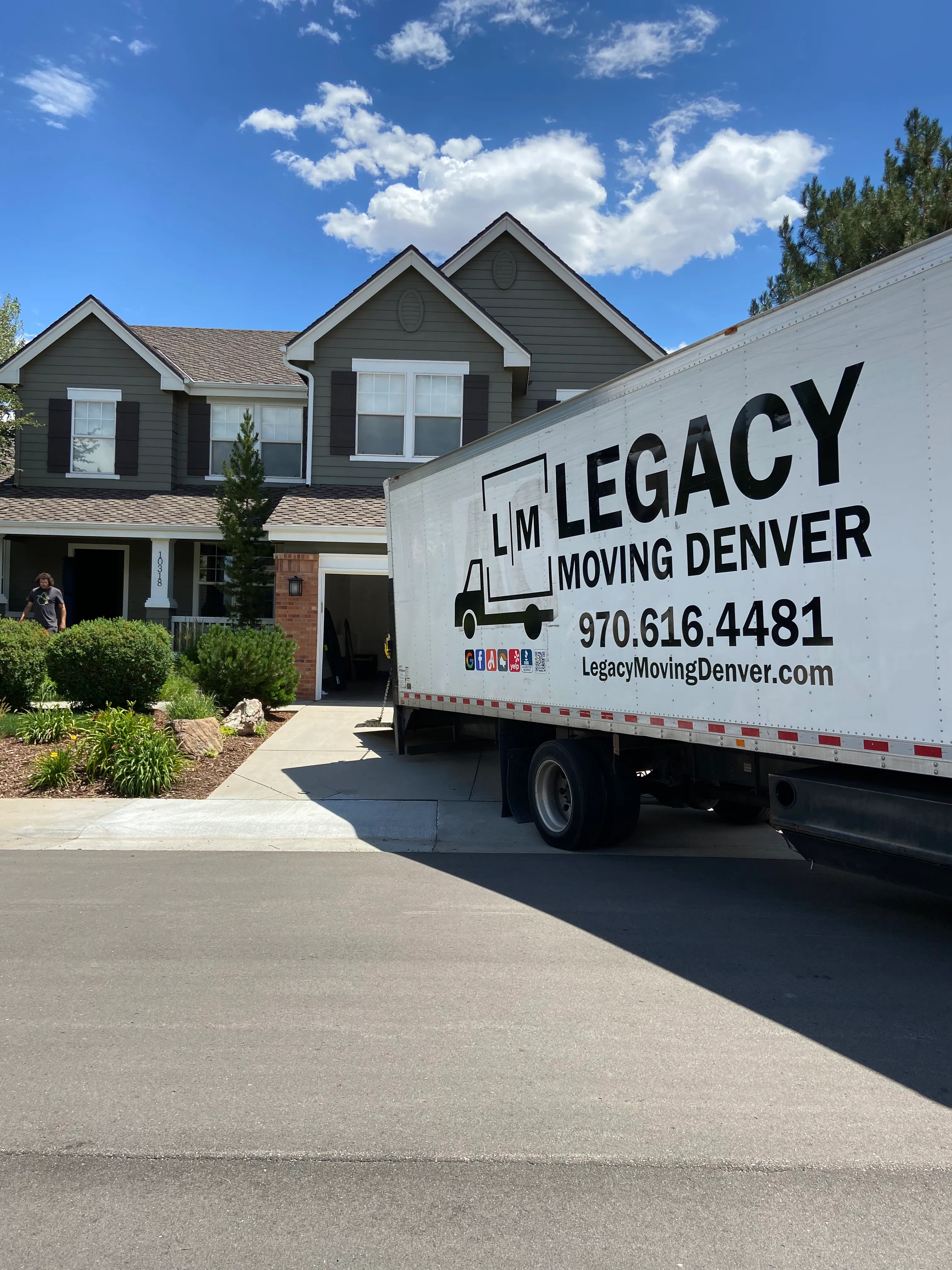
Moving is expensive. Between hiring professional movers, buying packing supplies, overlapping lease payments, utility deposits, and the hundred other costs that surface during a relocation, the total bill has a way of climbing well past what people budget for. In Denver's market — where the moving industry stays busy from March through September and demand regularly outpaces supply — the pressure on costs is real. People look for ways to reduce what they spend, and that's completely reasonable. The problem comes when the search for savings leads to decisions that cost more in the long run: damaged furniture, a company that holds belongings hostage, a move that takes twice as long as estimated, or belongings that aren't covered when something goes wrong.
This guide covers the strategies that genuinely work — concrete, practical ways to reduce what you spend on your Denver move without ending up worse off. Some require planning ahead. Some are just about knowing which questions to ask. None of them involve gambling on the cheapest quote you can find and hoping for the best.
Understand What Actually Drives Moving Costs in Denver
Before you can effectively reduce your moving costs, it helps to understand what determines them in the first place. Moving quotes aren't arbitrary — they're built from a set of variables that you have more control over than you might think.
For Local Moves: Time Is the Primary Cost Driver
Almost every local move in Denver is priced hourly. The rate depends on the number of movers and the size of the truck required. A typical hourly rate in Denver for a two-person crew with a truck runs roughly $120–$180 per hour depending on the company, the season, and the specific services included. A three-person crew runs $150–$230 per hour. These are ballpark figures — actual rates vary, and getting an accurate quote specific to your situation matters more than any general range.
What this means practically: anything you do to reduce the number of hours your move takes directly reduces your bill. An organized, pre-packed home where furniture is already disassembled takes fewer hours than a home where the movers are working around unpacked rooms and assembling/disassembling everything themselves. Every extra minute on the clock is money.
For Long-Distance Moves: Weight and Distance Drive Cost
Interstate moving is priced differently from local. For moves out of Colorado to another state, the two primary factors are the weight of your shipment and the distance it travels. A move from Denver to Chicago at 1,000 miles with 5,000 lbs of goods costs more than the same distance with 3,000 lbs. Every pound you cut from your shipment has a direct, measurable effect on your cost.
Additional factors that affect long-distance pricing:
- Stair access and long carries at origin or destination (which affect load/unload time)
- Packing services added to the move
- Valuation coverage chosen — released value (minimal, included) vs. full-value protection (additional cost)
- Fuel surcharges, which vary with diesel prices
- Shuttle service if a large truck can't access your street
Peak vs. Off-Peak: The Seasonal Premium
The moving industry in Denver — like everywhere — has a defined peak season. It runs roughly from Memorial Day weekend through the first two weeks of September, with the absolute peak in June and July. During this window, companies are running full schedules, availability is limited, and pricing reflects the demand. Weekends within peak season are the most compressed of all.
This seasonal dynamic is the single biggest external factor in what you'll pay. A move in the second week of September costs less than the same move the second week of August, simply because demand is lower. Understanding this is the first step to using it.
Move During Off-Peak Times — The Largest Single Cost Lever
If there's one thing you can change that has a bigger impact on your moving cost than anything else, it's when you move. The mathematics here are simple: off-peak moves face less competition for company availability, more scheduling flexibility, and in some cases directly lower pricing.
Off-Peak Months in Denver
The lowest-demand period for moving in Denver runs from November through early March. Winter moves in Colorado come with their own set of considerations — weather, road conditions, and the fact that some people are reluctant to move in the cold — but the movers who do winter moves regularly are experienced with it, and the cost advantage is real.
October and late September occupy a middle tier: demand has dropped from peak but it's not the dead of winter. These months often represent a reasonable balance between scheduling flexibility and comfortable moving conditions.
April and May are when demand starts climbing. Early April is still relatively accessible; by the second half of May, peak pricing is arriving.
Off-Peak Days of the Week
Within any given month, Monday through Thursday moves are easier to schedule and often more available than Friday through Sunday. The weekend premium is real across the moving industry because that's when most people want to move — they don't want to take time off work. If your situation allows a mid-week move, even if it means using one or two vacation days, the scheduling advantage is often significant. Some companies offer better rates for weekday bookings specifically because they're trying to smooth out their scheduling load.
Avoiding Month-End and Major Holidays
The end of any given month is a crunch time in the moving industry. Leases end on the 30th or 31st; everyone needs to be out and in on the same general timeframe. If you have any flexibility in your move date, moving mid-month — even a few days off the 1st or 30th — gives you access to more scheduling options and less time pressure. Avoid the week before Memorial Day, Labor Day weekend, and the July 4th window. These are the most heavily booked stretches of the moving calendar.
Our Early Bird Discount
For people who book well in advance, there are concrete benefits beyond just availability. Our early bird discount rewards customers who plan ahead and lock in a date early. The earlier you book, the more options you have — and locking in a date three to six weeks out means you're getting the date you actually want rather than what's left.
Book Early — The Compounding Benefits of Lead Time
The relationship between booking lead time and moving cost is more nuanced than most people realize. It's not just about potentially lower rates — it's about the cumulative advantages that come with having time on your side.
Availability Expands With Lead Time
During peak season in Denver, moving companies with strong reputations fill their schedules quickly. If you're calling in mid-June looking for a move date in late June or early July, you're competing with everyone else who did the same thing. The companies with the best reviews and the most consistent track record are the first to book out. Calling six to eight weeks in advance means you have genuine choices, not a decision made under pressure from whatever's still available.
You Have Time to Compare Quotes Properly
Getting a quote you actually understand — one that accounts for your specific situation, your home's access, your inventory, and the services you actually need — takes time. When you're booking last-minute, you take whatever quote you can get and hope it's accurate. When you have a month or more, you can get multiple quotes, ask questions about what's included, and make an actual comparison rather than a rushed guess.
Time to Reduce Your Load
One of the most effective ways to reduce the cost of any move — particularly a long-distance one — is to move less stuff. But sorting through years of accumulated belongings takes more time than people budget for. Booking early gives you time to make thoughtful decisions about what comes with you rather than throwing everything into a box on the last day.
Early Bird Rates
Beyond just availability, some companies — including Legacy Moving Denver — offer direct pricing advantages for booking early. The early bird discount exists because advance bookings help companies plan their schedules. You benefit from the commitment in the form of better pricing. It's a genuine win-win that's underutilized simply because most people don't book far enough ahead.
Reduce What You're Moving — The Weight and Volume Audit
For local hourly-rate moves, less stuff means less time on the clock. For long-distance weight-based moves, less stuff means directly lower cost. In both cases, a deliberate edit of what you're actually moving is one of the most effective ways to reduce your bill — and one of the most frequently skipped.
Why People Skip the Edit
The weeks before a move are typically frantic. There's so much logistical ground to cover — finding a company, coordinating dates, setting up utilities, dealing with address changes — that sorting through belongings feels like one more thing to do rather than a cost-saving measure. And emotionally, deciding to part with things is harder under time pressure than when you have breathing room.
The result is that most people move things they don't need, don't use, and wouldn't have kept if they'd had more time to think about it. Old furniture they've been meaning to replace. Equipment from hobbies they dropped. Clothes in a size that no longer fits. Books they'll never read again. All of it costs money to move.
Items Worth Evaluating Before You Pack a Box
Large furniture you don't love. A worn sectional on its last legs, a bed frame that's been wobbling for two years, a bookshelf that came from a big-box store in college — these items have real moving cost attached to them. For a long-distance move, compare the weight cost of moving the item against the replacement cost in Denver. For local moves, consider whether the time and labor to move heavy furniture you'd replace anyway is worth it.
Duplicate items. Households accumulate duplicates without noticing. Two sets of kitchen gear that never get used together, three lamps in a garage, four cast iron pans when you only use one. A quick pass through the kitchen, garage, and storage areas often reveals significant volume that doesn't need to make the trip.
Appliances being replaced at the new home. If the house you're moving into already has appliances, you're moving your old washer, dryer, and refrigerator somewhere. Unless they're clearly better than what's in the new home, the cost of moving old appliances often approaches or exceeds their value. Selling them before the move and buying new at the new location is worth calculating.
Books. Heavy, sentimentally kept, practically never opened. A deliberate sort of your book collection can remove meaningful weight from a long-distance shipment. For local moves, heavy book boxes add time to the load. Media mail shipping through USPS is an option for sending books separately at a much lower cost than moving them by weight.
Garage and storage area contents. The accumulated stuff in storage areas is often the least examined before a move. Tools you duplicate when you move in somewhere new, equipment from activities you've stopped doing, boxes from a previous move you never opened. A storage area audit before packing often reveals more volume than expected.
Children's outgrown gear. Cribs, strollers, baby swings, high chairs, activity gyms — the mountain of gear that comes with early childhood has real weight to it. If it's genuinely done being used, a move is the moment to let it go rather than pay to transport it to a new garage.
What to Do With What You're Not Moving
A pre-move declutter isn't just about reducing cost — it can also put money back in your pocket. For larger furniture and electronics, Facebook Marketplace and Craigslist move things quickly. For smaller items, a one-day garage sale before the move is practical. For items that aren't worth selling, Denver has excellent donation infrastructure: Arc Thrift Stores pick up furniture, Goodwill takes a broad range of items, and neighborhood buy-nothing groups can move almost anything. Items that genuinely have no life left in them need to go to the trash before the move rather than taking up space on the truck.
Get Multiple Quotes — And Actually Understand What You're Comparing
Getting more than one quote is standard advice, but it only helps if you understand what you're actually comparing. Moving quotes can be structured very differently, and comparing a low hourly rate from one company against a slightly higher all-in rate from another, without understanding what each includes, leads to bad decisions.
What to Standardize Across Quotes
When you're getting multiple quotes, make sure each company is quoting the same scope:
- The same inventory (your complete list of items, not a rough description)
- The same services (packing provided by movers vs. you pack, assembly/disassembly, etc.)
- The same access conditions (stairs, elevator, long carry from truck to door, parking constraints)
- What happens if the move takes longer than estimated
- What materials are included (shrink wrap, moving blankets, tape, wardrobe boxes)
- Fuel surcharges and trip fees, if applicable
- Insurance and liability coverage included in the base quote
The Danger of the Lowest Quote
The moving industry has a persistent problem with low-ball quotes — estimates given over the phone without a proper inventory assessment, which balloon into much higher final bills on delivery day. This tactic is more common among less reputable companies because it's effective at winning the booking. The customer sees a low number, books based on it, and then has very little leverage on delivery day when the actual cost is presented.
Protecting yourself against this:
- Get a binding estimate whenever possible, especially for long-distance moves
- Ask specifically how the company handles situations where the move takes longer than quoted
- Check reviews specifically for mentions of surprise charges or quotes that didn't match final bills
- Verify the company's licensing (USDOT number for interstate movers, PUC number for Colorado intrastate movers)
A company with strong reviews, verified licensing, and transparent pricing that quotes $50/hour more than a competitor is almost always the better financial decision in the end.
In-Home vs. Over-the-Phone Estimates
For moves of any significant size — two bedrooms or more — an in-home or virtual estimate is more reliable than an over-the-phone quote. When a company can actually see what you have, the estimate they give you is based on reality rather than your best guess at describing your apartment. A few companies now offer virtual estimates via video call, which captures most of the same information as an in-home visit without requiring a scheduled appointment.
Ask About Every Available Discount — Most People Don't
This is genuinely one of the most underutilized ways to save money on a move. Moving companies offer discount programs that a significant portion of eligible customers never use simply because they don't know to ask. The programs exist; the money is there; most people just don't claim it.
Military and Veteran Discounts
If you're active duty military, a veteran, a reservist, or a military family member, ask specifically about military pricing before you book with anyone. Denver and the broader Front Range have a significant military and veteran population — Buckley Space Force Base, the Army Reserve, the Air National Guard, and a large veteran community from bases across Colorado mean that military pricing programs are meaningful and actively used. You can see how ours specifically works at our military discount page.
These discounts often aren't advertised at the top of a company's website — you have to ask. Ask every company you're getting quotes from, not just one.
Bundle Discounts for Multiple Services
If you're adding packing services, short-term storage, or additional services to your move, bundling them together often comes at a better combined rate than booking each service separately. The logic from the company's side is straightforward: keeping more of your business under one roof is worth something, and they pass part of that value back to you in pricing.
If you were already considering using packing help, or if you need a few weeks of storage between move-out and move-in, ask what a bundled quote looks like versus individual services. Our bundle discount page outlines the specifics.
Early Booking and Referral Programs
As covered above, booking early unlocks better availability and in some cases direct pricing advantages. Our early bird discount is one concrete way that timing translates into savings.
Some companies also have referral programs — if someone you know referred you, there may be a benefit attached. And if your company, apartment complex, or real estate agent has a preferred mover relationship, that's worth asking about. These arrangements sometimes include meaningful discounts for affiliated customers. The full discounts page is worth checking for what's currently available.
Corporate and Relocation Package Discounts
If you're moving for work and your employer is covering or subsidizing the move, there are a few things worth clarifying before you book. Some employers work with specific moving companies through corporate accounts that include preferential rates. Others provide a lump sum that's yours to spend as you see fit — in which case the savings from negotiating a good rate go directly to you. Make sure you understand your employer's policy before assuming you need to use a specific company or that cost isn't a factor.
Do the Packing Yourself — Strategically, Not Desperately
Professional packing services add to the cost of a move. For people who are time-constrained, have large households, or have collections of fragile or valuable items that genuinely need professional handling, it's worth every dollar. For people who have time, energy, and a reasonably manageable amount of stuff, doing your own packing is a real way to reduce the bill.
The key word is "strategically." There's a version of DIY packing that saves money and goes smoothly. There's another version — rushed, poorly organized, boxes over-packed or improperly padded — that creates damaged items, slows down the movers on load day, and ends up costing more in time and replacements than professional packing would have.
The DIY Packing Timeline That Works
Start packing far earlier than you think you need to. For most households, four to six weeks before the move is a reasonable starting point for the first boxes. The progression that works:
- Four to six weeks out: Out-of-season clothing, decorative items, books, things in storage areas, anything you're not using in daily life
- Two to three weeks out: Secondary bedroom contents, extra linens and towels, entertainment items, hobby supplies
- One week out: Most of the kitchen except daily essentials, artwork, most remaining clothing, bathroom items except daily use
- Final two to three days: Daily essentials — coffee maker, a few plates and cups, toiletries, work equipment, phone chargers
- Moving day eve: Everything remaining except what's in the essentials bag you're taking in your car
This rhythm distributes the work over time so you're not doing everything in a panicked final push. Boxes packed calmly are packed better — meaning better protection for the contents and less re-packing required.
Packing Best Practices to Reduce Damage
Even cost-effective DIY packing needs to be done properly to avoid the expense of damaged items:
- Use the right box size for the weight: heavy items (books, dishes) go in small boxes; lighter items (linens, pillows) go in large boxes
- Fill every box completely — empty space allows items to shift and break. Use crumpled packing paper, towels, or clothing to fill gaps
- Wrap fragile items individually — one sheet of packing paper per item minimum, more for anything genuinely breakable
- Mark fragile boxes on all sides, not just the top — boxes get placed sideways in trucks, and a fragile mark on only one side is a fragile mark nobody sees
- Label every box with room destination and general contents — "Kitchen — plates, mugs" is useful; "Kitchen" is not
- Don't seal heavy boxes without testing that you can actually lift them
The Hybrid Approach
You don't have to choose between full DIY packing and full professional packing. A practical middle ground: pack everything yourself except for the rooms or items you're most concerned about. Delicate collections, irreplaceable artwork, china sets, electronics — having the movers professionally pack these specific areas keeps the overall cost reasonable while protecting the things where the risk is highest. You can review what packing services include to figure out the right split for your specific situation.
Source Packing Supplies for Free or Very Cheap
If you're buying every box, roll of tape, and sheet of packing paper new from a moving supply store or U-Haul, you're spending meaningfully more than you need to. With a little advance planning, most of what you need can be sourced at minimal cost.
Free Boxes — Where to Actually Find Them
The places that reliably have good-quality free boxes:
- Liquor stores — the single best source. Liquor boxes are small, sturdy, and built to hold weight. They're ideal for books, kitchen items, and anything heavy. Ask any employee; they have boxes constantly and are almost always happy to save them for someone.
- Bookstores — same idea. Books arrive in appropriate boxes for moving books.
- Grocery stores — banana boxes in particular are very sturdy. Ask at the produce section rather than the customer service desk.
- Office supply stores — printer paper boxes are excellent: strong, uniform size, easy to stack.
- Facebook Marketplace and Nextdoor — people who just moved are trying to get rid of boxes constantly. A quick search for "free moving boxes" in your Denver neighborhood will almost always find someone.
- Buy Nothing groups — hyper-local Facebook groups organized by neighborhood that are very active in Denver. Post that you need moving boxes and you'll typically have offers within hours.
Free Packing Materials
Packing paper can be supplemented with:
- Newspaper (collect in the weeks before your move; ask neighbors to save theirs)
- The paper and cardboard from your own online deliveries
- Towels, blankets, and clothing as padding for fragile items inside boxes — you're moving these anyway, so using them as padding is essentially free
- Socks for individual wrapping of small fragile items like glasses and mugs
For wardrobe boxes specifically — the tall boxes with hanging rods for moving clothes on hangers — it's usually worth buying a few new ones for formal and delicate clothing rather than trying to source them free. But for general household goods, free and low-cost sources cover most of what you need.
Use Storage Only When You Actually Need It
Short-term storage is a genuinely valuable tool when your move-out and move-in dates don't align, when you're doing work on the new home before moving in, or when you're downsizing and need a staging period to figure out what works in the new space. It is not free, and adding unnecessary storage to a move adds real cost to the total.
When Storage Makes Sense
The cases where storage legitimately saves money and stress:
- Your lease ends before your new place is available and you'd otherwise need a hotel plus somewhere for your belongings
- You're buying a home and the sellers need two extra weeks after closing — your belongings need to be somewhere during that gap
- You're doing renovations at the new home and can't have furniture in certain rooms yet
- You're moving into a significantly smaller space and need time to make decisions about what stays and what goes
In these situations, short-term storage eliminates a genuine problem and is worth the cost. If none of these apply and you're just adding storage as a buffer out of anxiety, it's worth asking whether you actually need it.
Moving Company Storage vs. Self-Storage Facilities
For storage periods longer than two to four weeks, it's worth comparing rates between moving company storage and independent self-storage facilities in Denver. Moving company storage tends to be convenient — your belongings stay in their containers and can be delivered without a second move — but it can be more expensive per month than self-storage for longer durations. Denver has good self-storage options at various price points. Run the numbers for your specific timeline before defaulting to one or the other.
Labor-Only Service for the Right Situations
Full-service moving — where the company brings the truck, the crew, and all the equipment — is the most convenient option and makes sense for most residential moves. But it's not the only option, and for the right situations, a different approach can be significantly less expensive.
If you have access to a truck — renting one, using a container service like PODS, or having a truck available through other means — hiring a moving crew for labor only means you're paying for the physical work without the transportation cost. This works best for:
- Local moves where you're comfortable managing the truck logistics
- Moves with straightforward access (no stairs, no long carries, no parking complexity)
- People who have already sourced or rented a truck and want professional help with the loading and unloading
Loading and unloading services cover exactly this — professional crew, physical work, your transportation. For some moves, this is the right balance.
Where it gets less cost-effective: when the savings on not having a moving company truck are offset by the rental truck cost, fuel, insurance, and the stress of driving a large vehicle through Denver traffic. Do the full math before assuming labor-only is cheaper for your specific situation.
Special Considerations for Long-Distance Moves Out of Denver
People leaving Colorado — relocating to Texas, the Pacific Northwest, the Midwest, or anywhere else — face a different cost structure than local movers and have different levers available to manage it.
Weight Reduction Is Worth Real Effort
For an interstate move priced by weight, every 500 lbs you cut from your shipment reduces your cost in a direct, measurable way. Before a long-distance move, the cost-benefit calculation on furniture becomes very concrete: if a piece of furniture weighs 200 lbs and your rate is $0.50/lb, moving it costs $100. If it's worth $150 to buy used at the destination, you're saving $50 by replacing it rather than moving it. For older, worn, or low-quality furniture, the math often favors selling or donating before the move rather than paying to transport it.
Get a Binding Estimate, Not a Binding Not-to-Exceed
For long-distance moves, the type of estimate matters enormously. A binding estimate locks in a price based on your inventory; regardless of what the shipment actually weighs, you pay the quoted amount. A non-binding estimate is an approximation that can change based on actual weight. A binding-not-to-exceed means you pay the lower of the estimated price or the actual weight-based cost — which sounds good but is sometimes structured in ways that are less protective than they sound.
Understand exactly what type of estimate you have before you sign anything. For long-distance moves, a binding estimate on a thoroughly documented inventory is the gold standard for cost certainty.
Timing on Long-Distance Moves
The same seasonal patterns that affect local pricing apply to long-distance moves, often more dramatically. Summer is the peak of interstate moving demand. If your destination timeline allows any flexibility, moving in late September, October, or the winter months can result in meaningfully lower quotes. For the long-distance moving conversation specifically, timing flexibility is worth discussing when you're getting quotes.
What Not to Cheap Out On — The Places Where Savings Cost You More
This guide is genuinely about saving money, but saving money intelligently means knowing where the floor is — the places where cutting cost creates problems that end up costing more than the savings were worth.
Don't Choose a Mover Based Solely on the Lowest Quote
This deserves its own section because it's the most common and most expensive mistake people make when trying to save money on a move. Moving companies that dramatically underprice reputable competitors are almost always doing so because something isn't right:
- Hidden fees that appear at delivery — fuel surcharges, flight of stairs charges, long carry fees, and other items not disclosed in the original quote
- Unlicensed operation — companies without proper USDOT or PUC licensing have no regulatory accountability when things go wrong
- Inadequate insurance — if belongings are damaged by an under-insured mover, you have limited recourse
- Slow or incomplete moves — companies that understaff to cut costs take longer, which on hourly billing can eliminate any apparent savings
- Rogue movers — a real and documented industry problem where a company takes a deposit, picks up belongings, and then demands a higher payment at delivery or delays indefinitely
Verify licensing through the FMCSA database (for interstate movers) or the Colorado PUC (for intrastate Colorado moves). Read reviews — specifically look for mentions of final bill vs. quote accuracy. A company with a strong local reputation that costs more than the rock-bottom option is almost always the correct choice when you do the full accounting.
Don't Skip Proper Valuation Coverage
Released value protection — the minimum liability option included in your moving contract by default — provides coverage of $0.60 per pound per item. For a 50-lb television worth $800, that's $30 in coverage. It is not meaningful protection for most household goods.
Full-value protection (also called full-value replacement) is the other standard option and costs more, but it means that if an item is damaged or lost, the mover either repairs it, replaces it, or pays the current market value. For a long-distance move especially — where belongings travel further and are handled more — the premium on full-value protection is worth serious consideration.
Third-party moving insurance is another option if you want to shop around for coverage independently. But whatever you do, don't decline to think about this and assume you're protected when you're not.
Don't Under-Resource a Large Move
The temptation to book the minimum crew size to save money can backfire on larger moves. A two-person crew on a four-bedroom house takes significantly longer than a three-person crew — and on hourly billing, the additional crew member pays for itself. The movers also work safer and with less fatigue when the crew is appropriately sized, which means less risk of damage. The right crew size for your move is the one that gets it done efficiently, not the smallest one available.
Putting the Strategy Together
The moves that come in under budget without sacrificing quality are almost always the ones that were planned deliberately and started early. The combination of timing flexibility (off-peak, mid-week, advance booking), a reduced and organized inventory, multiple accurate quotes, available discounts applied, and appropriate DIY involvement — these aren't tricks. They're just the practical levers that consistently produce better outcomes.
The other element that matters: choosing a company you can actually trust. The savings you generate by doing everything on this list can be eliminated in a single day by a mover with hidden fees, damaged belongings, and no accountability. Reputation, licensing, clear contracts, and real reviews from real customers are the foundation that makes everything else work.
If you're planning a move within the Denver metro — whether that's a local move within Denver itself, a relocation to Arvada, Westminster, Englewood, or anywhere else on the Front Range — a free quote is the right starting point. It costs nothing, and it gives you a real, specific number to work with rather than ranges and guesses. The FAQ page covers the common questions that come up before most moves, and the discounts page outlines what programs are currently available — worth checking before you finalize anything.