
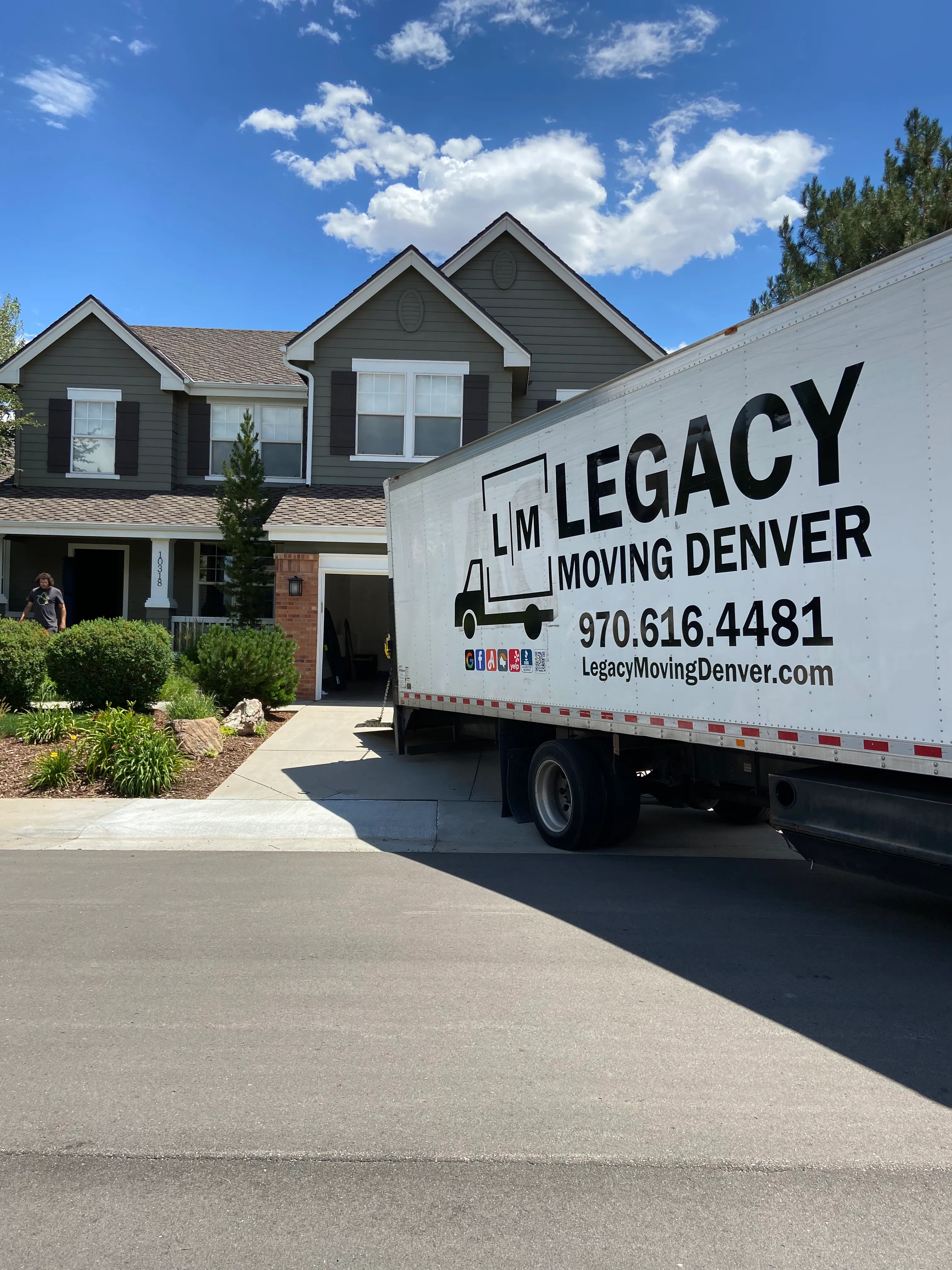
Moving day has a way of revealing every decision you made — or didn't make — in the weeks before it. The people who have genuinely smooth moves aren't just lucky. They avoided a specific set of mistakes that catch most people off guard. Some of these mistakes are small inconveniences. Others turn into expensive, time-consuming problems that follow you into your new home.
This isn't a rehash of generic advice. These are the actual, recurring problems that come up on move day in Denver — the stuff that slows things down, costs extra, or just makes a hard day harder than it needs to be. If you're moving in the Denver metro and you read through this before your move date, you're going to be in significantly better shape.
Mistake #1: Not Confirming Your Movers the Day Before
This one seems almost too obvious to mention, but it happens more than you'd think. You booked a moving company weeks ago, you got a confirmation email, and you haven't thought about it since. Move day arrives and... something's off. The arrival window is different than you remembered. There was a miscommunication about the address. The crew size isn't what you expected. Or, in the worst cases, the company is a no-show.
The fix is simple: call or email your moving company the day before the move. Confirm the arrival window, the address, the crew size, what's included, and the payment method. This five-minute conversation catches most miscommunications before they become day-of problems. If you're dealing with a larger, less communicative company, this call also signals that you're organized and paying attention — which tends to improve the level of service you receive.
It also gives you a last chance to add or remove items from the scope, note any access issues at either property, or ask questions that will make the day flow better.
Mistake #2: Not Reserving Parking or Elevator Access in Advance
Denver's neighborhoods range from very move-friendly (suburban streets with easy truck access) to genuinely challenging (dense urban areas with street parking restrictions, loading zones, and buildings that require reserved elevator windows). The problem isn't that these challenges exist — it's that people don't think about them until the truck is already on the way.
In neighborhoods like Capitol Hill, LoDo, LoHi, and RiNo, a full-size moving truck needs a place to park. That might mean a temporary no-parking permit from Denver's Department of Transportation and Infrastructure, applied for at least five business days in advance. If you're in a building with a service elevator, that needs to be reserved with building management — sometimes weeks in advance on busy weekends.
Showing up without a parking plan in a dense Denver neighborhood means your movers are either circling the block, parking illegally and risking a ticket, or carrying your furniture significantly farther than planned — all of which adds time and potentially adds cost. If you have any question about whether your move location requires parking coordination, figure it out a week before move day, not the morning of.
Mistake #3: Not Being Fully Packed When the Movers Arrive
This is the single most common source of moving day delays, and it's entirely preventable. Movers are there to move your belongings — to load them onto a truck safely and efficiently and get them to your new home. They are not there to stand around waiting while you pack the last three boxes of stuff you procrastinated on.
Every hour your movers spend waiting for you to finish packing is time you're either paying for (if it's an hourly rate) or time that throws off the entire day's schedule. And packing while movers are present in your home means you're doing it rushed, which leads to poorly packed boxes that break in transit.
The rule of thumb: be completely packed before the movers arrive. Not mostly packed. Completely. The only things that should be left out when they show up are the items you deliberately set aside to transport in your own car — documents, medications, valuables, your "moving day bag" of essentials.
If you genuinely can't get packed in time, professional packing services exist for exactly this reason. It's far better to add packing to your moving service than to have movers arriving at a half-packed house.
Mistake #4: Underestimating How Much Stuff You Have
People consistently underestimate the volume of their belongings when planning a move. This affects everything — the size of the truck needed, the number of movers, the time required, and ultimately the cost. "I don't have that much stuff" is something moving professionals hear constantly, and it's almost never accurate.
The problem shows up most often in two places: storage areas and closets. The living room and bedroom furniture are visible and easy to account for. The basement storage that accumulated over five years, the walk-in closet that's been absorbing overflow, the garage — those are the areas that catch people off guard.
Before you book your move, do a complete, room-by-room inventory of everything you're taking. Include the garage, attic, basement, storage unit, and any other spaces where things live. Give the moving company the most accurate picture possible. An accurate estimate prevents surprises on moving day and ensures the right truck and crew size show up.
This is also a good reason to declutter before your move. Less stuff means a faster move, which is better for everyone. Our moving tips page has guidance on this if it's something you want to work through methodically.
Mistake #5: Not Knowing How to Handle Large or Specialty Items
A piano, a gun safe, a hot tub, an antique armoire, a pool table, a large wall-mounted TV — these items require different handling than standard furniture. Not every moving crew is equipped to handle specialty items without advance notice and appropriate equipment.
If you have anything large, unusually heavy, or fragile to a degree that standard moving blankets and shrink wrap won't cover it, tell your movers when you book — not on moving day. Specialty items may require additional equipment (dollies, straps, cranes, crating), a different crew composition, or more time allocated. Springing this information on a crew when they arrive creates a situation nobody wants to be in.
Similarly, items that require disassembly and reassembly (bed frames, large sectionals, wall units, trampolines) should be noted in advance. Some moving companies handle this as a standard part of the service; others treat it as an add-on. Know which situation you're in before moving day.
Mistake #6: Not Clearing a Path
Movers carrying heavy furniture through your home need clear, unobstructed paths from every room to the front door. What's "obvious" to walk around when you're an adult navigating your own home becomes a hazard when someone is carrying a dresser backward while looking over their shoulder.
Before your movers arrive, walk through every room and every route to the door with this question in mind: could two people carrying something large get through here without a problem? Things to clear include:
- Rugs that slide or bunch — roll them up and set them aside
- Kids' toys, pet gear, and anything on the floor that could catch a foot
- Breakables on shelves near pathways that could be bumped
- Doors that need to be propped open — get something to prop them
- Gates, baby barriers, or pet containment items that need to be moved
- Anything in the garage that blocks truck access or loading
If you have pets, they should be secured on moving day — in a room at the back of the house, at a friend's place, or at a boarding facility. Doors are going to be open for extended periods, and a stressed dog or cat in a chaotic moving environment is a genuine risk.
Mistake #7: Not Having Your Payment Method Ready
This sounds almost embarrassingly simple, but payment confusion at the end of a moving job is more common than it should be. Some people assume they can pay with a card when the company only takes cash or check. Others forget to account for additional time that accrued during the move. Some don't realize that tips, while not required, are customary and don't know what's appropriate.
Before moving day, confirm with your moving company:
- What payment methods are accepted
- When payment is due (at delivery, at completion of loading, etc.)
- How additional time or services would be billed if the scope changes
- Whether there are any fees (fuel surcharge, stair fee, long carry fee) that could add to the final amount
If you're tipping your crew — and for a job well done, it's absolutely appropriate — have cash on hand. Most people in the moving industry prefer cash tips so they can share them directly with the crew. The general industry standard is somewhere in the range of $20–$50 per mover for a typical local move, but that's genuinely just a guideline. A difficult move with a great crew deserves more. Use your judgment.
Mistake #8: Forgetting to Do a Final Walkthrough of Your Old Home
Moving day moves fast, and by the time the truck is loaded, you're mentally already at your new home. It's surprisingly easy to leave things behind — items in the back of a closet, things stored under a bed, an item hanging on a wall, a piece of furniture tucked in a corner that got overlooked.
Before you lock up your old place for the last time, walk every room. Open every closet. Check under every bed. Look in the garage, the attic, the basement, any storage areas. Check outside — the backyard, the shed, the side yard. Open every cabinet in the kitchen. Check the laundry room for anything still in the washer or dryer. Check the bathroom cabinet.
This walkthrough should happen after the truck is loaded, not before. Things tend to appear in clear sight once the furniture is gone that were invisible when the room was full.
If you're a renter, this walkthrough also doubles as your move-out documentation. Take photos and video of every room after it's empty, before you hand over the keys.
Mistake #9: Not Labeling Boxes Clearly Enough
Every moving professional has a version of the same story: boxes labeled "Misc" or "Stuff" that end up in the wrong room at the new house, forcing a second round of heavy lifting to relocate them. Or fragile items that weren't labeled and got stacked under heavy boxes.
Useful box labels include the destination room, a brief contents description, and any handling notes. "FRAGILE — Kitchen — Glasses and dishes" is genuinely useful. "Kitchen stuff" is not. "HEAVY — Books — Office" tells movers where it goes and how to handle it. Labels on the top and at least one side of every box are better than just the top, because boxes in a loaded truck are often only visible from the side.
Color-coded tape by room is a system that works really well — pick a color for each room, put a strip of that tape on every box for that room, and tape a matching color strip on the door of the corresponding room in your new home. Movers can drop boxes without reading at all, which speeds up unloading significantly.
Mistake #10: Trying to Do Too Much Yourself on Move Day
There's a version of this that shows up in DIY moves: the person who decided to save money by renting a truck and moving themselves, who is now four hours in, exhausted, with half the house still to go, a back that's starting to protest, and three friends who came to help and are now quietly wishing they'd said no.
But it also shows up in moves with professional help: the homeowner who tries to carry boxes at the same time as the movers, gets in the way, slows the process down, and ends up more exhausted than if they'd just let the crew do their job.
If you've hired movers, your job on move day is coordination, not manual labor. Be available to answer questions, direct where things go in the new home, and handle the non-physical logistics — kids, pets, documentation, communication with building management. Let the crew work. That's what you're paying for.
If you're doing a DIY move and hitting a wall, there are loading and unloading services available even if you're renting your own truck. Sometimes the best compromise is handling the truck yourself but getting professional help for the actual heavy lifting.
Mistake #11: Not Planning for Kids and Pets
If you have young children or pets, moving day without a plan for where they'll be during the actual move is a recipe for chaos. Movers need to move freely through the space with large items. Doors will be open for extended periods. The environment is chaotic and stressful for animals and small children alike.
For kids under about 10, the best move day setup is having them somewhere else entirely — with grandparents, a neighbor, or on an outing with another parent. For older kids who are staying, give them a defined role and a defined space. A "command center" in one room with snacks, activities, and instructions to stay put goes a long way.
For pets, the same general principle applies. Move them to a secure room at the back of the house well before movers arrive, or better yet, have them at a friend's house or a boarding facility for the day. A scared or curious dog getting into the moving zone is a safety issue for everyone involved.
Mistake #12: Ignoring the Weather Forecast
Colorado weather is famously unpredictable, and Denver specifically can go from sunny to afternoon thunderstorm in a matter of hours — particularly in spring and early summer. Moving furniture in rain requires more care to protect items in transit. Ice and snow on walkways or driveways create genuine safety hazards. High wind can make carrying large, flat items (mattresses, mirrors, large paintings) genuinely dangerous.
Check the forecast for your move day and make sure you have:
- Tarps or moving blankets to protect furniture in transit if rain is expected
- Towels or floor protection inside both homes if it's wet outside
- Ice melt or sand if there's any chance of ice or frost in fall or winter
- A plan for protecting electronics and wood furniture from moisture
Professional moving companies that work year-round in Colorado — particularly those doing Denver, Lakewood, Golden, and the foothills — have protocols for weather. If you're booking a move in a season with unpredictable weather, it's worth asking how the company handles rain or snow on move day.
Mistake #13: Not Having an "Essentials" Box or Bag Ready
Your first night in a new home should not involve tearing through forty boxes to find your phone charger, your toothbrush, your coffee maker, or your kid's favorite stuffed animal. It will if you don't set aside an essentials kit before anything gets loaded.
Pack a separate box or bag — one that travels in your car, not the moving truck — with everything you'll need for the first 24 hours in your new place:
- Phone chargers and any device cables you use daily
- Medications and any health items
- Toiletries — toothbrush, toothpaste, soap, shampoo
- A change of clothes for everyone
- Snacks and basic food for the first meal
- Important documents (lease, closing paperwork, ID, insurance cards)
- Bedding for the first night, or at minimum a pillow and blanket per person
- Kids' and pets' essentials if applicable
- A basic toolkit — screwdriver, Allen wrench, box cutter, tape
- Paper towels, toilet paper, and hand soap for the new bathrooms
Keep this bag with you, not on the truck. Everything else can wait until tomorrow.
One More Thing: Build In Some Buffer Time
Moving days almost always take longer than the estimate. Traffic, elevator wait times, unexpected disassembly, a neighbor who needs a conversation, a piece of furniture that doesn't fit through a doorway the way you thought it would — something always adds time. Building a buffer into your day — not scheduling anything critical in the first few hours at your new place, giving yourself a realistic window rather than an optimistic one — means that when things take longer than expected, it's a minor inconvenience rather than a cascade of problems.
The moves that go smoothest are the ones where the people involved went into the day prepared, realistic, and unhurried. You can't fully control what happens, but you can control how well you've set yourself up.
If you're planning a move in the Denver metro and want to start on the right foot, a free moving quote is a good first step — it forces you to think through the scope of your move and starts the planning process in a concrete way. And if you have questions about what to expect, our FAQs and contact page are there when you need them.
Move day is one day. With a little preparation, it doesn't have to be a rough one.