
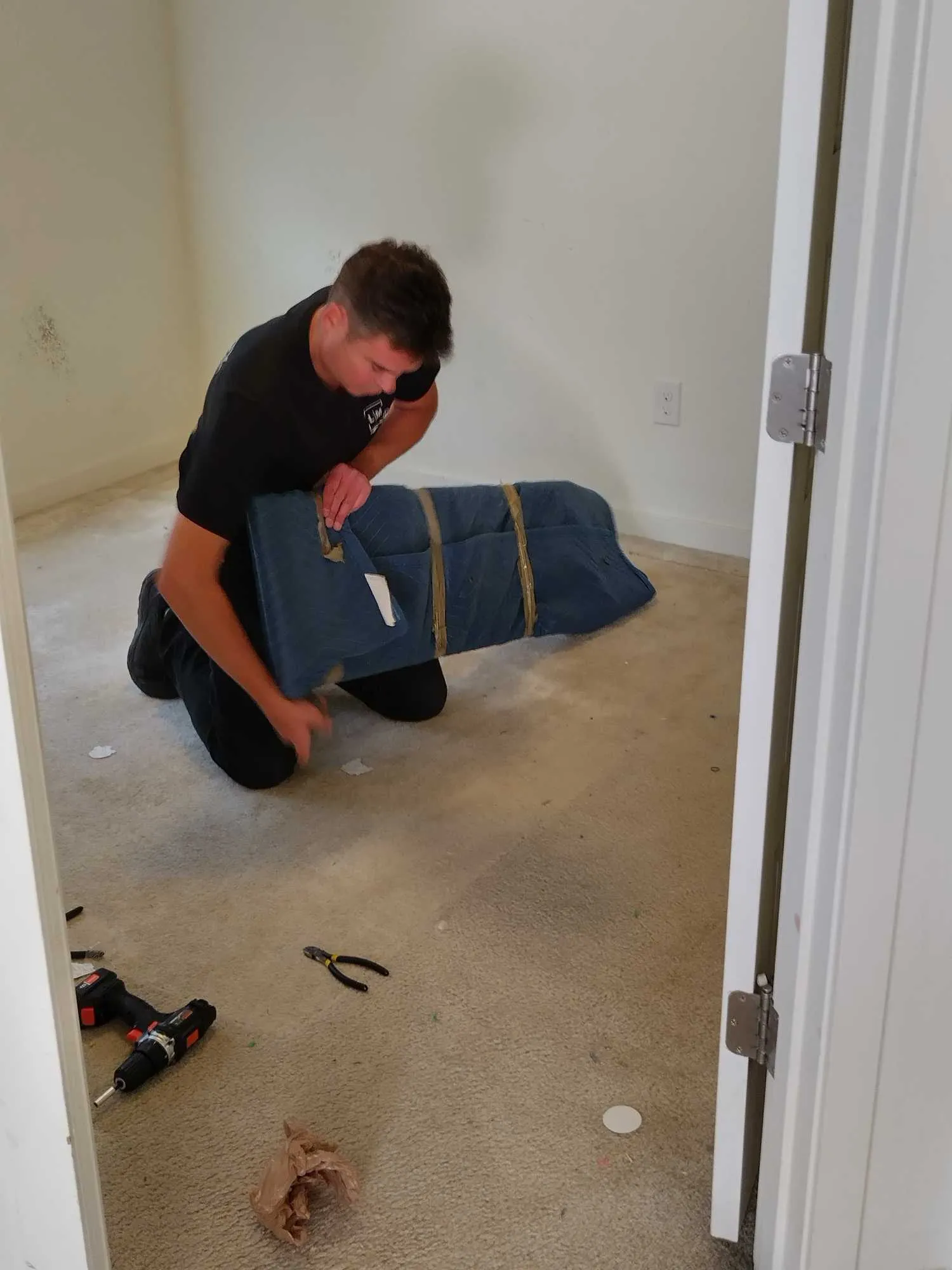
You found a place downtown. Maybe it's a high-rise on 16th Street, a mid-rise condo near LoDo, a newer building in RiNo, or one of those converted loft spaces in Five Points. Whatever it is, you're excited. And then you start asking around about what moving day is actually going to look like, and suddenly people are saying things like "elevator reservations" and "COI requirements" and "parking permits" and you're wondering what exactly you've gotten yourself into.
Moving into a downtown Denver apartment or condo is genuinely different from moving into a house in Highlands Ranch or a ground-floor apartment in Aurora. The logistics are more complicated, the building rules are stricter, and if you don't know what you're walking into ahead of time, you can blow your whole move-in day on easily preventable problems.
I've helped move hundreds of people into downtown Denver buildings over the years. What follows is everything I wish more people knew before they showed up on move-in day.
Why Moving Into a Downtown Denver Building Is Its Own Thing
When you move into a suburban house or a standard apartment complex, you basically drive the truck up, carry stuff in, done. Downtown is different. You're dealing with:
- High-density buildings where dozens of units share common spaces
- Elevators that need to be reserved and protected during moves
- Loading docks or designated move-in areas instead of a front door
- Parking that is almost always a massive issue
- HOA or building management boards that have actual teeth
- Narrow city streets and parking enforcement that shows no mercy
None of this is impossible. But all of it requires planning that most people who haven't moved downtown before don't think to do until it's too late.
Elevator Reservations: The Thing Nobody Tells You Until It's Too Late
If your new downtown Denver apartment or condo is on anything above the second or third floor, you are going to be using an elevator to move in. And in the vast majority of buildings in downtown Denver—especially in newer towers, converted lofts, and managed condo buildings—you cannot just use the elevator whenever you feel like it on move-in day.
You need to reserve it in advance. Sometimes weeks in advance.
Here's how this typically works: The building management or HOA designates specific windows of time when a freight elevator or a padded service elevator is available for moves. These slots might be a few hours long—say 8am to noon, or 1pm to 5pm. During that window, the elevator gets padded to protect the walls and floors, and it's yours. Outside of that window? Forget it. You're either waiting, or you're violating building rules.
In some of the bigger downtown Denver high-rises near Union Station, the Art District, or along the 16th Street Mall corridor, there might only be one move-in slot available per building per day. Sometimes per floor. That's how limited it gets. And if another resident already booked the slot you wanted? You're waiting, potentially days, for the next available window.
What you need to do: The day you confirm your lease or closing, contact building management or the HOA and ask specifically about move-in procedures. Don't assume. Ask them directly: Do I need to reserve the elevator? How do I do that? What are the available time slots? Is there a fee? What happens if my movers run over time?
Some buildings also require your moving company to provide a certificate of insurance (COI) before they'll even allow the elevator reservation to be confirmed. More on that in a minute.
Freight Elevators vs. Passenger Elevators
Bigger buildings in downtown Denver often have a separate freight or service elevator specifically for moves, deliveries, and maintenance. If your building has one, use it—don't try to move furniture through the passenger elevator even if it technically fits. The building will not be happy about it, and you're risking damage to a shared space that will come back to haunt you.
Smaller buildings—some of the older converted spaces in Capitol Hill, Curtis Park, or Five Points—might only have one elevator total, and that elevator needs to get padded and reserved just the same. In these cases, the windows are even more important because other residents can't use the elevator during your move.
Parking: The Problem You Will Absolutely Underestimate
Let's talk about parking because this is where downtown Denver moves fall apart more often than anything else.
Moving trucks are big. Downtown Denver streets are not designed with moving trucks in mind. Many downtown blocks have no legal parking for large vehicles. The streets around LoDo, LoHi, and parts of Capitol Hill are narrow, often one-way, and heavily enforced. Parking enforcement officers in downtown Denver are not sympathetic to moving trucks. If a truck parks illegally, it will get ticketed and potentially towed, and that scenario is an absolute nightmare you don't want anywhere near your move-in day.
The solution—and you have to plan this in advance—is a parking permit.
The City and County of Denver does allow you to apply for temporary "No Parking" signs for moving purposes. You apply through the Denver Public Works Department and request reserved street space for the moving truck on your specific move-in date. These permits are not guaranteed, and they take time to process. You generally want to apply at least two weeks before your move, and ideally three weeks if your move is on a weekend.
Not everyone knows this exists, and plenty of people skip it thinking they'll figure it out on the day. What actually happens: the truck double-parks blocking traffic, a parking enforcement officer shows up within 20 minutes, the truck gets a ticket and potentially has to relocate, and now your movers are walking twice as far carrying your couch. The domino effect on move-in day is real and ugly.
Building-Specific Parking and Loading Zones
Some downtown Denver apartment and condo buildings—particularly newer towers—have their own designated loading zones or underground loading docks. These are great when they exist, but they come with their own rules. Time limits are common. Some loading docks require notification or activation. Some require the building management to be physically present to allow truck access.
Again: ask your building management before move-in day. Specifically ask about where the moving truck should park or load, whether there's a loading dock, whether it requires advance notice, and what the time restrictions are.
Parking for Your Actual Car
This is a separate issue from the moving truck and it trips people up all the time. Many downtown Denver condo and apartment buildings have limited parking—often one assigned spot per unit, which you might have paid a hefty monthly fee or a significant upfront cost to secure.
But on move-in day, you might also have family helping, a second vehicle, a POD or container that needs to sit somewhere temporarily. Plan for this ahead of time. Know where additional vehicles can park legally. If your building has a parking garage, confirm whether you can use a guest spot on move-in day or if those are strictly off limits.
HOA Rules: They Are More Strict Than You Think, and More Enforced Than You're Used To
If you're buying a downtown Denver condo rather than renting, you're entering HOA territory. And HOAs in Denver's downtown condo market are not the same as the HOA on a suburban street where they mostly just care about whether your grass is too long.
Downtown Denver condo HOAs can be very active, very detailed in their rules, and very serious about enforcement. You agreed to their Covenants, Conditions, and Restrictions (CC&Rs) when you bought the unit, whether you read them thoroughly or not. Move-in day is often the first real test of whether you understand those rules.
Certificate of Insurance Requirements
This one catches people completely off guard. Many HOAs and building management companies in downtown Denver require that any moving company you hire provide a Certificate of Insurance (COI) before your movers are allowed to access the building, use the elevator, or access the loading area.
The COI is a document from your moving company's insurance provider confirming they carry liability insurance, and it often needs to list the building or HOA as an additional insured party. This protects the building if the movers cause damage to shared areas—hallways, elevator walls, lobbies, loading docks.
Legitimate, professional moving companies will have no problem providing a COI. They do it regularly. But you need to ask for it ahead of time—typically the moving company needs to request it from their insurance carrier and it takes a few days. And your building management needs to receive and approve it before your move date.
If you hire a moving company that can't or won't provide a COI and your building requires one, you will be denied access on move-in day. Full stop. I've seen it happen. It's a terrible way to start life in your new place.
What to do: When you contact building management about your move, ask specifically whether they require a COI from your moving company. If yes, forward those requirements to your movers as early as possible.
Move-In Fees and Deposits
Some downtown Denver buildings charge a move-in fee, a refundable move-in deposit, or both. The deposit is typically held to cover any damage to common areas during your move—scuffs on the elevator walls, dings on the lobby floor, that kind of thing. If the building inspection after your move finds no damage, you get it back. If it does find damage, they'll bill against the deposit.
These fees can range from a couple hundred dollars to over $1,000 depending on the building. Make sure you know what you're expected to pay before move-in day so there aren't financial surprises.
Move-In Day Hours and Quiet Hours
Many downtown Denver condo buildings have strict rules about when moves can happen. You might only be allowed to move in between 8am and 5pm on weekdays, or between 9am and 4pm on weekends. Some buildings prohibit moves entirely on Sundays or holidays. These rules exist to protect other residents from the noise and disruption of a big move.
If you try to push past the allowed window—even by an hour—building management has the authority to stop the move. I've seen building security physically ask movers to stop work at 5pm on the dot. Get your start time right, and give yourself a realistic buffer for how long your move will actually take.
What the CC&Rs Might Restrict
Beyond move-in logistics, your HOA's CC&Rs likely regulate a lot of things you might not think about until you've already violated one:
- Flooring requirements — Some buildings require a minimum amount of carpet or area rug coverage on upper floors to reduce noise to neighbors below. If you're planning to lay down hardwood or tile everywhere, check the rules first.
- Renovation and modification restrictions — Want to paint the walls, install shelving, or replace kitchen fixtures? Many downtown Denver HOAs require you to submit plans and get approval before any modifications.
- Pet rules — Weight limits, breed restrictions, number of pets allowed—these can be strict and non-negotiable.
- Short-term rental prohibitions — Many downtown Denver HOAs have explicit bans or heavy restrictions on Airbnb or VRBO rentals. If that was part of your plan, verify before you close.
- Common area usage — Rules around rooftop decks, pool areas, gyms, and shared outdoor spaces.
- Guest parking and visitor policies
None of this is meant to scare you away from downtown Denver condo living. The HOAs often provide real benefits—maintained common areas, building security, shared amenities. But knowing the rules before you move in means no surprises.
Coordinating With Your Moving Company for a Downtown Denver Move
Not every moving company in Denver has experience with downtown high-rise and mid-rise moves. It's worth asking directly when you're getting quotes.
A moving company that's done plenty of downtown Denver jobs will know what a COI is, know how to navigate the freight elevator situation, know how to request parking permits, and will factor the additional logistics into their estimate. A company that's mostly done suburban house moves might underestimate the complexity—and the extra time downtown logistics add.
When you're getting quotes, tell your movers specifically that you're moving into a high-rise or mid-rise downtown. Give them the building address, let them look up the situation if they're not familiar with it. Ask them whether they've moved people into that building or similar buildings before. Ask how they handle the COI process.
Also—and this matters a lot—be honest with your movers about the elevator situation and the available time window. If you only have a four-hour elevator slot, your movers need to know that so they schedule the right number of crew members to get the job done in that window. Showing up with a two-person crew for a three-bedroom condo with a four-hour elevator window is a recipe for chaos.
The Downtown Denver Neighborhoods and What to Expect
Different downtown Denver neighborhoods have different move-in dynamics. Here's a quick rundown:
LoDo (Lower Downtown)
Historic brick buildings, converted warehouses, and some newer towers. Parking is consistently challenging—very limited street parking, very narrow blocks in some areas. Buildings here often have strict loading zones and time windows. Union Station area buildings tend to be newer with better loading dock infrastructure.
RiNo (River North Arts District)
A mix of new construction buildings and converted industrial spaces. Newer construction here often has decent loading areas. The streets in RiNo are a bit wider than old LoDo, which helps with truck logistics. HOAs in newer RiNo buildings can be very active.
Capitol Hill
Mostly older buildings, some converted apartment houses, some smaller condo buildings. Elevator situations vary wildly—some buildings have old, small elevators; others have been renovated with larger freight elevators. Street parking can be very tight. Permit parking zones exist throughout Capitol Hill.
LoHi (Lower Highlands)
A mix of older homes that have been converted into condos and newer mid-rise buildings. Hillside terrain adds a twist—some buildings have unusual layouts where the "ground floor" is different depending on which entrance you use. Street access and truck parking can be challenging on some of the hilly blocks.
Five Points and Curtis Park
More mixed, with a range of older residential buildings and some newer construction. Generally a bit more maneuverable than the heart of downtown, but still city conditions—plan accordingly.
The Real Cost of Not Preparing
Let me be real with you about what happens when people don't prepare for a downtown Denver move:
- Movers show up, can't access the elevator, have to wait hours or reschedule—you're paying for their time either way
- Moving truck parks illegally, gets ticketed ($100+) and potentially towed (hundreds more)
- Building denies entry because the COI wasn't submitted—move is delayed days while paperwork gets sorted
- Move runs over the elevator time window, building management locks the elevator—rest of your stuff sits in the truck overnight
- Move-in deposit is partially withheld due to lobby damage that could have been prevented with better equipment or technique
Every one of those scenarios is avoidable with a few phone calls and emails made two to three weeks before move-in day. That's really all it takes—some advance communication with building management and your moving company.
Your Downtown Denver Move-In Checklist
Here's a simple checklist to work through before your downtown Denver move:
- Contact building management the day your lease or closing is confirmed
- Ask about elevator reservation procedures and book your slot immediately
- Ask whether a Certificate of Insurance is required from your movers
- Ask about the loading zone or loading dock situation
- Apply for a Denver parking permit for the moving truck (Public Works Department)
- Confirm move-in hours and time restrictions with the building
- Ask about any move-in fees or deposits and when they're due
- Read your HOA's CC&Rs before move-in day, not after
- Book a moving company with downtown Denver high-rise experience
- Request the COI from your movers and submit it to building management at least a week before move-in day
- Confirm your elevator reservation the day before the move
- Communicate the time window to your movers so they staff appropriately
The Bottom Line
Downtown Denver apartment and condo living is genuinely great. The walkability, the access to restaurants and culture and nightlife, the views from a high floor, the energy of the city—people who move downtown usually don't regret it. The move-in day itself is just more complicated than a standard house move.
The difference between a smooth downtown move and a catastrophic one almost always comes down to preparation. Call the building early. Understand the elevator rules. Handle the parking in advance. Make sure your movers know what they're dealing with. Give yourself more time than you think you need.
Do those things, and move-in day can actually be exciting and energizing—the start of a great chapter in your downtown Denver life rather than a logistical disaster that sets the tone all wrong.
Moving Into a Downtown Denver Building?
We've handled hundreds of downtown Denver high-rise and mid-rise moves. We know the elevator procedures, the COI process, the parking permit situation—all of it. Call us and we'll walk you through exactly what your move is going to look like.
Call (720) 340-1849