
Here's a situation that comes up constantly in Denver real estate: you've sold your home and need to be out by the 30th, but your new place doesn't close until the 10th of the following month. Or your apartment lease ends two weeks before your new rental is available. Or the house you're moving into needs contractor work done first and you simply can't get furniture in there yet.
A gap between move-out and move-in is one of the most common—and most stressful—parts of any relocation. The question everyone ends up asking is: what do you do with all your stuff in the meantime? Where does the couch, the dining table, the boxes of kitchen equipment, and everything else actually go for those days or weeks in between?
The good news is there are more options than most people realize. And depending on how long your gap is, some options are dramatically more practical than others. We help people navigate this situation all the time—both here in Denver and for customers moving to and from other parts of the country. Let's break it down.
First: How Long Are We Actually Talking?
The length of your storage gap shapes almost every decision that follows. The situation generally breaks into three categories:
A few days to about a week. You're out of your old place Friday, but you can't get into the new one until the following Thursday. This is genuinely short-term, and the most convenient solution often doesn't involve a storage unit at all—more on that in a moment.
One to three weeks. A very common real estate timing gap. Your belongings need somewhere safe for a couple of weeks while a lease, closing, or renovation situation resolves. This is where coordinated storage—handled as part of your overall move—makes the most sense.
A month or more. You're staging a home for sale and want furniture out of the way, or you're relocating to Denver from out of state and your new home won't be ready when your shipment arrives. This calls for a more planned storage solution, and we can help coordinate that from wherever you are.
Each of these has a different best answer. Let's go through them.
Option 1: We Keep It in the Truck
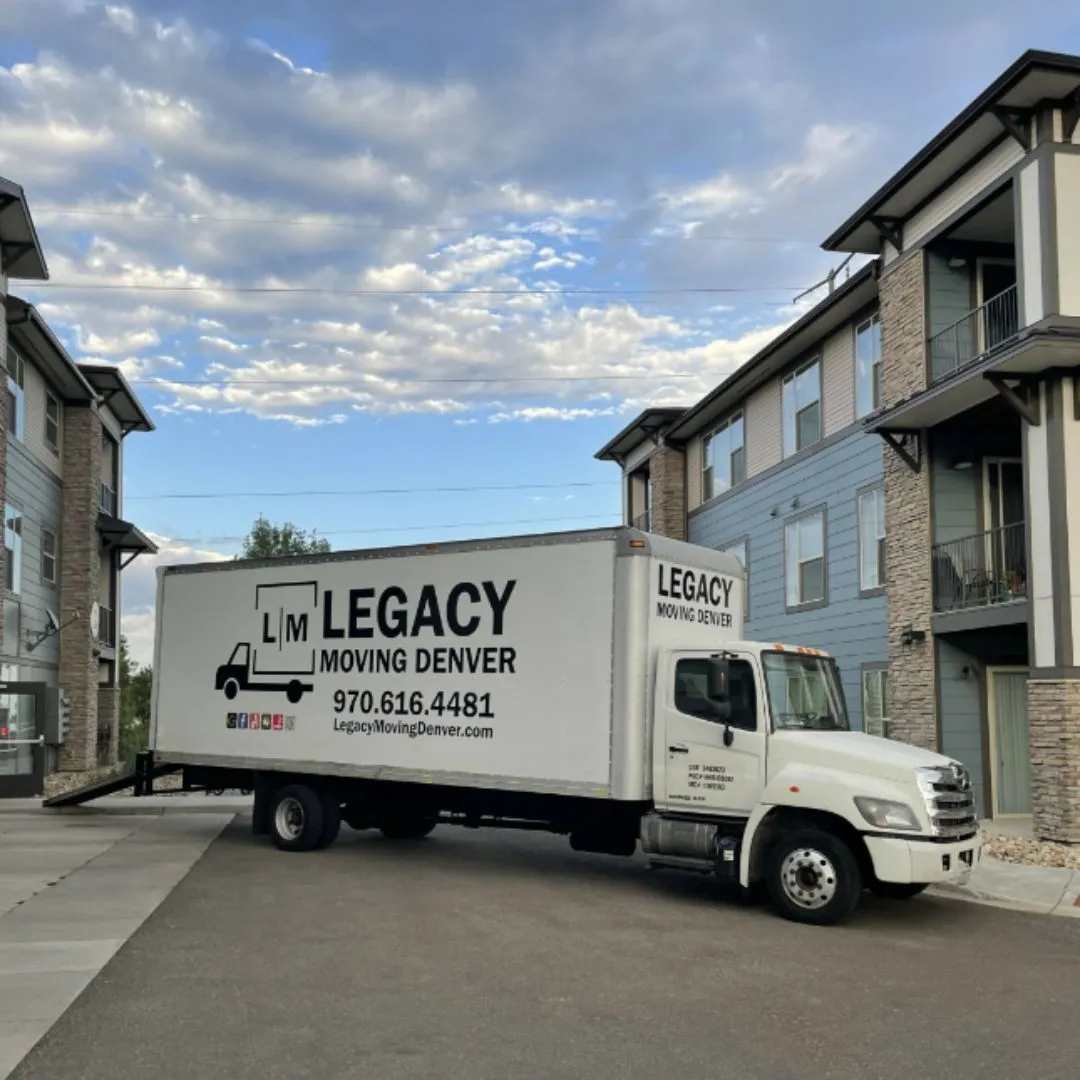
If your gap is relatively short—anywhere from overnight up to about a week, depending on the specifics—one of the most practical solutions is leaving your belongings secured in the moving truck until your new place is ready. This is something we can accommodate in certain situations, and for the right timeline it's often the cleanest option available.
What this looks like in practice: we load everything from your old place, the truck is secured (locked, not sitting somewhere exposed), and when access to your new home opens up, we deliver. You never have to unload into a storage unit and reload again. That matters more than it might sound—every time items get unloaded and reloaded, there's more handling involved, more time, and more opportunity for something to get scratched or bumped. Keeping everything in the truck for a short window eliminates that entirely.
There's also a cost advantage. If your gap is truly short, avoiding a full storage unit rental and two separate move trips can save you a meaningful amount. Storage coordination adds logistics; sometimes the simpler answer is just keeping things together until you're ready.
That said, there are real factors that affect whether this works. Extreme weather is the main one. Denver winters can drop well below freezing overnight, and Denver summers can make the inside of a truck extremely hot during the day. Electronics, musical instruments, artwork, plants, wine, candles, and anything with temperature sensitivity aren't ideal candidates for extended truck storage. For most standard furniture and household goods, it's typically fine—but the specifics of what you're storing matter, and so does the time of year.
The length of the gap matters too. A night or two is very different from five or six days. Whether truck storage works for your particular situation depends on timing, what you're moving, and the weather forecast. When you talk to us about your move, just mention your timeline—we'll tell you straight whether this makes sense for your circumstances or whether you'd be better served with a storage unit. You can reach us through our contact page or just give us a call.
Option 2: Storage We Help You Coordinate
For gaps longer than a few days, or when truck storage isn't the right fit, a storage unit is the practical answer—and this is an area where we genuinely take work off your plate. We have established partnerships with reputable storage facilities, and through years of working with customers across the country, we've built a network of vetted options we can tap into.
That means whether you're moving within Denver, relocating from Aurora to Boulder, or coming into Colorado from another state entirely, we can help coordinate storage access without you having to hunt down a facility, compare options, make separate arrangements, and then coordinate two different companies for the two legs of your move.
What the full-service version of this looks like: we pick up from your old home, transport your belongings to a storage facility we've coordinated, and when you're ready to move into your new place, we pull everything out of storage and deliver it. One company, one point of contact, beginning to end. That kind of continuity means better handling of your items, less confusion, and fewer logistics you're personally managing during an already-busy time.
The facilities we work with are secure and well-maintained—24/7 surveillance, controlled access, climate-controlled options for items that need it. Our storage solutions page has more detail on what that coordination looks like and what you can expect. For shorter gaps specifically, our short-term storage page covers that more focused scenario.
Storage That Works No Matter Where You're Moving
One thing worth mentioning: our ability to help with storage isn't limited to Denver. Through our partnerships and the network we've developed through years of long-distance work, we can help facilitate storage coordination regardless of where you're moving from or to. If you're coming to Denver from out of state, or if you're leaving the Denver area and need storage at the destination end, that's not a problem. We handle the coordination so you're not starting from scratch trying to figure out a market you don't know.
This is especially useful for long distance moves where timing between departure and arrival is trickier to control. Cross-country moves almost always involve some kind of timing gap, and having a single company manage both the moving and the storage coordination—wherever that storage needs to be—simplifies things considerably.
What Types of Storage Make Sense for a Move?
Denver and the surrounding metro area have plenty of storage options. Here's a practical breakdown of the main types:
Traditional Self-Storage Units
The most familiar option. You rent a unit, load your items in, and access them when you need to. These are available across the metro—from Lakewood to Westminster to Thornton—in a wide range of sizes and configurations.
The key decision here is climate-controlled versus standard. Denver's dry, high-altitude air is actually fairly gentle on stored furniture—wood doesn't warp the same way it does in humid climates. But temperature extremes are real. A standard unit in midsummer can get genuinely hot during the day, and certain items—electronics, instruments, artwork, leather, photographs, anything with adhesives—do better in climate-controlled space. In winter, cold can be a concern for some items as well.
For most standard furniture and household goods over a period of a few weeks, a standard non-climate-controlled unit is typically fine. For anything you'd consider sensitive or valuable, the climate-controlled option is worth the additional cost.
On sizing: a 10x10 unit (roughly the footprint of a standard bedroom) holds the contents of a one-bedroom apartment fairly comfortably. A 10x20 is a better starting point for a two or three bedroom home. When in doubt, go slightly larger—running out of space and scrambling for a second unit mid-move is an avoidable headache.
Portable Storage Containers
Companies like PODS and U-Pack deliver a storage container to your driveway, you load it at your own pace, and then it either gets stored at their facility or moved to your new address. This is a solid option for people who want to do the loading themselves and want flexibility in their timeline.
In Denver, the main practical consideration is driveway access. Older neighborhoods with narrow driveways or HOA restrictions on what can sit in front of a home may have complications. It's worth checking your situation ahead of time.
Portable containers tend to work well for longer-term storage or when you want to control the loading process yourself. For most shorter-term gaps where you're already working with a moving company, having that company coordinate a traditional storage unit is usually the cleaner path.
Full-Service Storage
This is the category where a company comes to you, picks everything up, stores it at their facility, and then delivers it back when you're ready. You never need to visit the facility yourself. For people who want zero involvement in the logistics of storage, this works well.
The tradeoff is typically cost per square foot compared to self-storage, and less flexibility if you need a specific item quickly. But for a move-related storage gap where you'll need everything back at roughly the same time anyway, it's often a good fit. The full-service coordination we offer operates in this model.
Storage During Specific Denver Move Scenarios
You're Selling and Staging Your Home
Denver's real estate market is competitive enough that presentation really does matter. Staged homes sell faster and at better prices, and a lot of homeowners in Denver, Highlands Ranch, Centennial, Littleton, and across the metro use storage as part of a deliberate staging strategy—clear out about half the furniture and personal items, get them out of the home, and let the space show at its best.
This is a situation our approach handles well. We can help you move a targeted set of items to a storage location while you continue living in and showing the home, then coordinate the full move once you've got a buyer and a closing date locked in.
You're Moving to Denver from Out of State
If you're relocating to Denver from another state and your new home isn't going to be ready by the time your belongings arrive, some form of storage is almost always part of the picture. The timing coordination between a cross-country move and a real estate closing is notoriously unpredictable—closings slip, possession dates shift, and your truck can't always wait around for days.
We've handled this scenario many times for customers coming to Denver, Arvada, Englewood, Golden, and other parts of the Front Range. Because we can help coordinate storage through our national network, the fact that you're coming from another state doesn't change how smoothly we can handle the logistics. Reach out early and tell us your timeline—we'll build a plan around it. See our long distance moving services for more on how we approach out-of-state moves.
You're Between Leases
Lease timing gaps are extremely common in Denver's rental market. Competitive neighborhoods often don't give you the luxury of perfectly overlapping leases, and a week or two in between is pretty standard. Storage for the bulk of your items, combined with staying with friends, family, or a short-term rental, is a workable plan for most people in this situation.
For people in Aurora, Westminster, Thornton, or anywhere else in the metro, we can move your items into storage at the end of your lease and back out when your new place is ready—treating it as one coordinated move rather than two separate, disconnected events.
Your New Home Needs Work First
Bought a fixer-upper in Denver? Planning kitchen or bathroom renovations before you move in? This is one of the most common reasons for a storage gap that people don't always anticipate. You have the keys, but you genuinely can't bring furniture and boxes in until the contractor finishes.
Storing your items during the renovation period is the right call for a few reasons: your belongings don't get covered in construction dust, contractors can work more freely without navigating around your furniture, and you don't have to worry about tools or materials causing damage to items you care about. Once the work wraps up, we coordinate delivery of your stored items to your now-finished new home.
Our storage services page has more on how this works end to end.
How to Think About Storage Costs
Storage costs vary based on a number of factors—unit size, location, climate control, facility quality, time of year, and how long you need it. Rather than give you numbers that may not reflect what you'd actually pay in your specific situation, the honest approach is to tell you what drives cost and let us give you accurate figures based on your actual needs.
Unit size is the biggest variable. A small unit for partial-home staging costs significantly less than a large climate-controlled unit for a full three-bedroom house. Location matters too—facilities closer to certain parts of the metro tend to run higher. Time of year plays a role as well, since peak moving season in summer typically means higher demand and less flexibility.
Beyond the storage unit itself, factor in the cost of the logistics: getting items into storage and back out. Having one company coordinate both legs of the move—drop-off and later pickup—can actually reduce your overall cost compared to handling each piece separately with different providers. It also reduces the number of times your items get handled, which matters for fragile pieces and furniture finishes.
The best way to get a realistic picture of what your specific storage situation would cost is to request a quote. We can walk through your timeline, what needs to be stored, where, and for how long—and give you a clear sense of what the options look like and what they'd run.
Planning Your Storage Move: Practical Steps
Get Your Dates as Clear as Possible Before Booking
Moving timelines shift constantly—closings get delayed, contractors run late, lease start dates get pushed. Before committing to any specific storage arrangement, get as clear as you can on your actual move-out and expected move-in dates. Ideally, also think through what happens if the move-in date slips by a week.
Month-to-month arrangements offer the most flexibility for temporary storage gaps. If there's any chance your timeline could extend, avoid locking into a longer commitment than you need.
Separate What Goes into Storage from What Goes with You
Not everything needs to go into storage during a gap. The items you'll need access to during the transition—a week's worth of clothes, toiletries, your laptop and chargers, important documents, basic kitchen supplies if you're staying somewhere temporarily—should stay with you or in a bag that doesn't go into the truck or storage unit.
Important documents in particular—passports, birth certificates, social security cards, lease or closing paperwork—should always stay with you, not in storage. This isn't just a convenience tip; it's basic protection in case you need to reference something quickly during the transition.
Label Storage Boxes with Extra Detail
Moving boxes that go into storage should be labeled just as carefully as boxes going directly to a new home—and with one extra consideration: if there's anything you might need to grab from storage during the gap, label it clearly and load it last so it's closest to the door. Burying something you'll need in the back of a unit behind everything else is a fixable problem, but it's also an annoying one.
Document What You're Storing
Before items go into storage, take a few quick photos of larger pieces and anything you'd consider valuable or difficult to replace. This is basic documentation that protects you if there's ever a question about item condition before and after storage. Most of the time you'll never need to reference these photos—but having them is easy and being without them when you need them is not.
Give Yourself Buffer Time on the Back End
When planning your storage window, build in a few extra days on the delivery end. Move-in dates shift more often than people expect, and scrambling to extend a storage arrangement at the last minute—or rushing delivery before a space is actually ready—is stress you can avoid by building in some cushion.
A Note on Insurance During Storage
Check whether your existing renters or homeowners insurance policy covers items in storage. Many policies do, at least partially—and if yours does, you may not need to purchase additional coverage through the storage facility. If you have high-value items in storage, it's worth confirming your coverage explicitly before the move, not after. If you need guidance on what coverage makes sense, that's something we can talk through with you as well.
What We Actually Recommend Based on Your Timeline
If your gap is a few days to about a week and the weather is reasonable: keeping your belongings in the secured truck is often the simplest and most cost-effective path. No extra unloading and reloading, no separate storage coordination, and everything stays in one place.
If your gap is one to three weeks: a storage unit that we help coordinate, with us handling both the drop-off and the eventual delivery to your new place. You get vetted storage, professional handling at both ends, and one company to deal with throughout.
If your gap is a month or more: storage unit coordination still, but now the specific type—traditional self-storage, full-service storage, or something else—depends on where you are, what you're storing, and how much access you might need during the storage period. This is something we'd walk through with you when building out your move plan.
Across all of these, the thing that makes the biggest difference is not waiting until the last minute to figure it out. If you know there's going to be a gap in your move timeline, tell us when you're getting your quote or as soon as you find out the dates don't align. The earlier we know, the better we can set up the right solution rather than scrambling around it.
The Bottom Line
A storage gap during a move is a common, solvable problem—and it's one we've helped customers navigate more times than we can count. Whether the answer is keeping things in the truck for a few days, connecting you with storage through our network, or coordinating a full multi-leg move-into-storage and back-out-again, there's a workable path for your situation.
If you're planning a move anywhere in the Denver metro—in Denver, Boulder, Golden, Lakewood, or anywhere else across the Front Range—and storage is part of the equation, reach out and let us know what you're working with. The more we know about your timeline upfront, the more seamlessly we can make the whole thing work.
For more on how we handle storage as part of a full-service move, visit our storage solutions page. For shorter-gap situations specifically, our short-term storage page covers that scenario in more detail. And if you're moving on a tight timeline, our same-day moves page covers how we handle situations where timing really is everything.
Gap in Your Move Timeline? Let's Work Out a Plan.
Whether you need a few days of truck storage or full coordination with a vetted storage facility, we can help figure out the right option for your situation. Get a free quote or give us a call to talk through your timeline.