
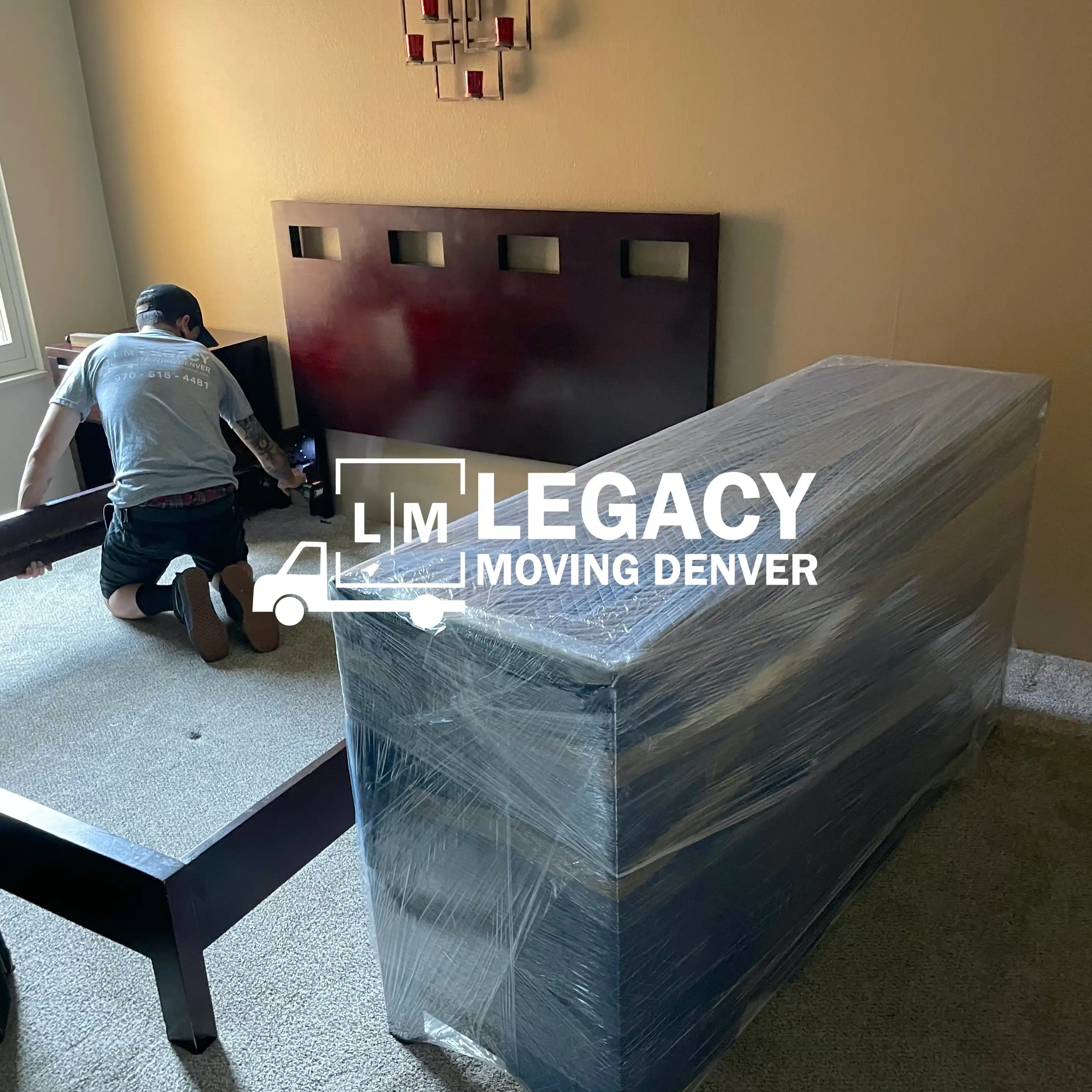
Moving is stressful enough without having to worry about whether the company you hired is actually legitimate. Unfortunately, shady moving operations are a real problem — from crews that pad the clock to full-blown scams where your stuff ends up held hostage until you pay more than agreed. Most people don't find out they hired a bad mover until moving day, which is the worst possible time to find out. Here's how to spot the warning signs early.
Sign #1: No License, No Insurance, No DOT Number
This is the most important one and the easiest to verify. Any legitimate moving company operating in Colorado is required to carry a USDOT number (for interstate or commercial moves) and a state PUC number for intrastate household goods moves. If a company can't immediately provide these numbers — or gets evasive when you ask — walk away.
Checking a company's credentials takes about two minutes. You can search USDOT numbers at the FMCSA website (safer.fmcsa.dot.gov) to confirm they're active and in good standing. If they're not licensed, they're not insured — and if they break something or disappear with your belongings, you have very little legal recourse.
At Legacy Moving Denver, our credentials are DOT #3462023 · MC #1189363 · PUC #HHG-00682, and we're happy to provide them to anyone who asks. A legitimate company will always give you this information without hesitation.
Sign #2: The Quote Sounds Too Good to Be True
Denver moving rates have a realistic floor. If a company is quoting $60 or $70 per hour for a two-man crew and truck, that number doesn't add up when you consider vehicle costs, insurance, labor, and fuel. Unusually low quotes are often how bad movers get their foot in the door.
The way the bait-and-switch usually works: they give you a low estimate over the phone or online, then on moving day the bill comes in two or three times higher. The crew "takes longer than expected," adds fees you weren't told about, or — in the worst cases — holds your belongings on the truck and demands cash payment before they'll unload.
This doesn't mean the most expensive quote is always the best. It just means anything that seems dramatically below market rate deserves a skeptical second look. Understand what Denver movers actually cost before comparing quotes — our guide on how much it costs to hire movers in Denver gives you realistic benchmarks.
Sign #3: No Physical Address or Online Presence
Legitimate moving companies have a real business address, a working website, active social media profiles, and verifiable reviews on Google, Yelp, or Facebook. If the company you're researching has none of these things — or a website that was clearly thrown together yesterday — that's a significant red flag.
Be especially careful with Craigslist ads or Facebook Marketplace posts from individuals offering moving help with a pickup truck. Some of these are totally fine people supplementing their income with labor. Others are scammers with no equipment, no insurance, and no accountability if something goes wrong. The risk is that you genuinely can't tell the difference until it's too late.
Look for a company that has been operating in Denver for multiple years, has hundreds of reviews that you can actually read (not just a star rating), and has a consistent presence on multiple platforms. One-off reviews on a single site are easy to fake; a consistent track record across Google, Yelp, BBB, and Angi is much harder to manufacture.
Sign #4: Verbal-Only Estimates and Vague Contracts
Any moving company worth hiring will give you a written estimate before the move. This protects both parties. If a company only gives you a verbal quote over the phone and resists putting anything in writing, that tells you a lot about how they operate.
The contract — or "order for service" as it's formally called — should clearly state the agreed rate, the services included, any additional fees (fuel surcharges, stair fees, long-carry fees), and what the company's liability policy is if something is damaged. Read it before you sign it, and don't let anyone rush you through it.
For long-distance moves specifically, know whether you're agreeing to a binding estimate (final price won't change regardless of weight) or a non-binding estimate (price can change based on actual weight). Non-binding estimates aren't necessarily bad, but you need to understand what you're agreeing to.
Sign #5: Overwhelmingly Negative Reviews — or Suspiciously Perfect Ones
Reviews tell you a lot, but you have to read them rather than just look at the star count. A company with 4.2 stars and 800 genuine reviews is usually more trustworthy than one with 4.9 stars and 12 reviews, all posted in the same three-week window.
When reading negative reviews, look for patterns. One complaint about a miscommunication isn't a red flag — every company has those. But multiple reviews mentioning the same issues (damaged items, late arrival, overcharging, unprofessional behavior) paint a much clearer picture of how the company actually operates.
Also look at how the company responds to negative reviews. A professional moving company will respond calmly, take responsibility where appropriate, and try to make things right. Companies that respond with hostility or make excuses for every complaint are telling you how they handle problems in real time.
What Good Movers Actually Look Like
Here's the flip side of every red flag above. A reputable Denver mover will:
- Provide their DOT, MC, and PUC numbers without being asked
- Give you a written estimate with itemized pricing before the move
- Have a trackable history of real reviews across multiple platforms
- Have uniformed, professional crews (not guys who showed up in a personal vehicle)
- Show up on time with the equipment they promised
- Be transparent about their damage and liability policy upfront
Understanding what professional movers do differently makes it easier to spot when a company is cutting corners — and to recognize the real thing when you see it.
How to Protect Yourself Before Hiring
A few concrete steps before you book anyone:
- Get at least two or three quotes — not to find the cheapest, but to understand what the market rate looks like and what each company is including.
- Verify credentials on the FMCSA website for interstate movers, and check the Colorado PUC for local household goods movers.
- Search the company name with words like "scam," "complaint," or "BBB" to surface any complaints that don't show up in their curated review profiles.
- Check the BBB at bbb.org. An accredited company has agreed to resolve consumer disputes through the BBB process.
- Trust your gut on phone and email communication. If a company is hard to reach before the move, they'll be even harder to reach after something goes wrong.
A Note on Denver's Moving Market
Denver has a lot of moving companies, which is generally a good thing — competition keeps pricing reasonable and service quality up. But it also means there are more companies to sort through, and not all of them are operating with your best interests in mind. Taking 30 extra minutes to vet a mover before booking is almost always worth it.
If you want to understand what pricing looks like so you can spot outliers, check our breakdown of how much movers cost in Denver. And if you want to understand what a great move actually looks like, read about what professional movers do differently.
About Legacy Moving Denver
We're a family-owned Denver moving company with over 1,700 five-star reviews and 6,000+ completed moves across the metro. We're licensed, insured, and BBB accredited. Our crews are background-checked, uniformed, and trained to handle moves of every size with the same level of care. If you're comparing movers, we're happy to answer questions with no pressure — call us at (720) 764-2299 or fill out our free quote form.