
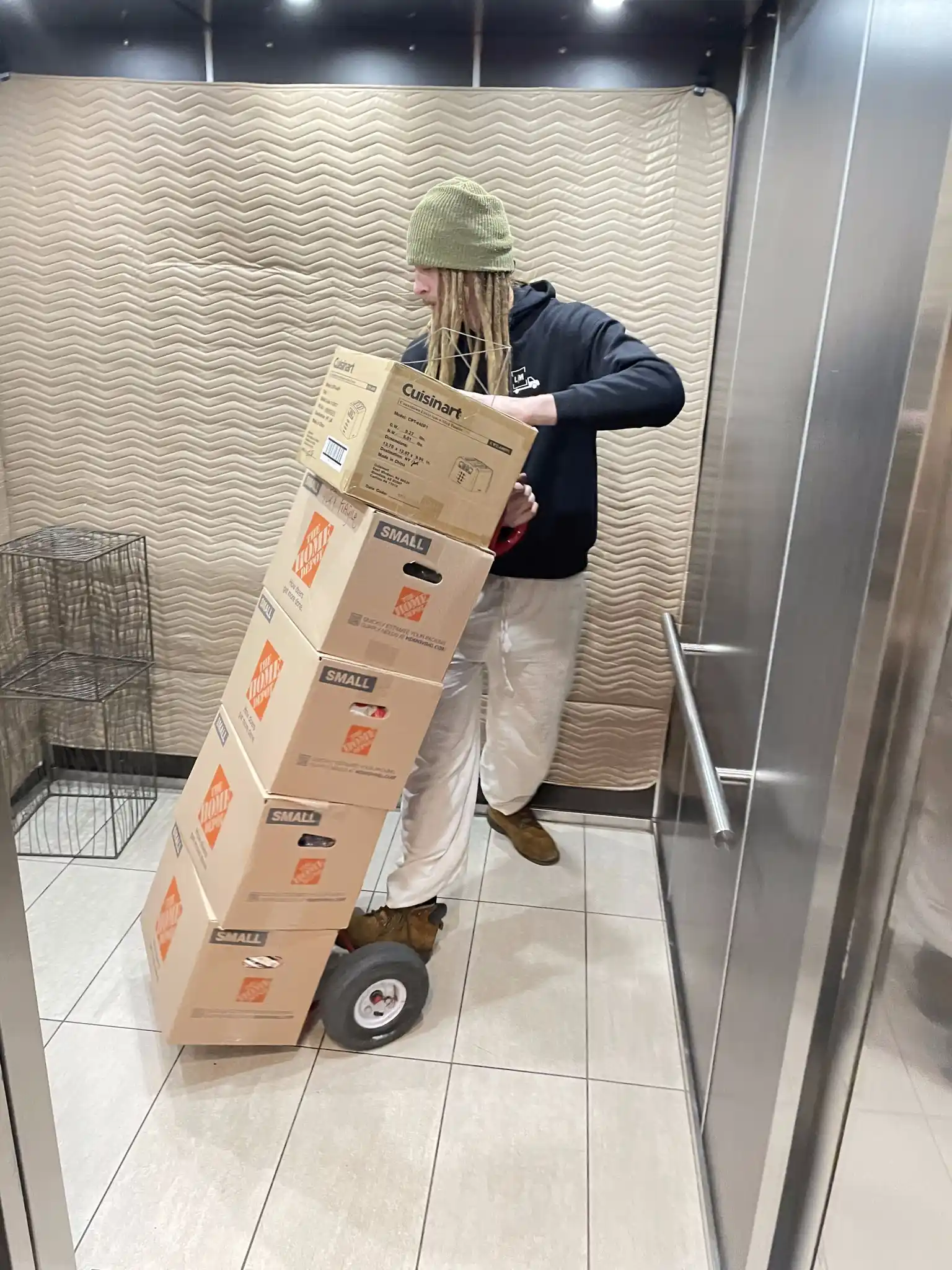
If you've ever rented a truck and moved yourself, you know how the day tends to go: underestimate the time, overestimate your energy, injure your back on a couch, and realize at 9pm that you haven't packed the kitchen yet. If you've ever watched a professional crew work, it feels like a completely different activity. Same goal, completely different execution. Here's what actually separates the two.
They Plan the Move Before They Arrive
Good movers don't just show up and figure it out. Before the truck leaves the yard, the crew has already reviewed the job — how many bedrooms, any access challenges, specialty items, how many boxes were estimated. They come with the right number of people, the right size truck, and the right equipment.
On arrival, they do a quick walkthrough of both the origin and destination to identify anything that might slow them down — tight corners, heavy pieces that need extra hands, items that need special handling. This five-minute walkthrough saves an hour of backtracking.
They Load the Truck Like a Puzzle
There's a genuine skill to loading a moving truck, and most people who've never done it professionally don't know it exists until they've packed a truck badly and watched everything shift and topple during transit.
Professional movers load from heaviest to lightest, bottom to top, with large furniture against the walls and boxes filling the center. Tall items stand vertically to reduce tipping. Fragile items are positioned away from the door where road vibration is highest. Furniture pads are used not just on individual pieces but as buffers between them. By the time the door closes, the truck is packed tight enough that nothing moves in transit — not because of luck, but because of deliberate placement.
A well-loaded truck also means faster unloading, because everything is organized and accessible in the right order.
They Use the Right Equipment
A professional crew shows up with equipment that changes what's physically possible:
- Appliance dollies: Move refrigerators, washers, and dryers safely without anyone herniating a disc.
- Furniture dollies: Roll heavy dressers and sofas across flat floors without dragging.
- Shoulder straps and forearm forklifts: Redistribute the weight of awkward, heavy items across two people so that staircases become manageable.
- Plastic wrap (stretch film): Protects upholstered furniture from dirt and moisture, and keeps drawers closed during transit without tape that leaves residue.
- Moving blankets: Pad furniture to prevent scratches and dents in both the items and the walls.
- Corner guards and door frame protectors: Keep walls and door frames from getting gouged when moving large pieces through tight spaces.
This equipment isn't just for show — it makes the move faster and safer, and it's one of the main reasons hiring movers is often worth the cost compared to DIY. Renting a truck doesn't come with any of this.
They Protect Your Home, Not Just Your Stuff
Moving furniture through a home creates a lot of opportunities for damage — scratched hardwood floors, gouged wall corners, dinged door frames, and broken banisters. A professional crew accounts for this from the moment they walk in. Floor runners go down on finished floors. Walls get temporarily padded at high-traffic corners. Furniture is carried at the right height rather than dragged.
This matters more on move-out day than people realize. Damage to a home you're selling or a rental you're vacating can cost you your deposit or create liability issues. A crew that protects the home as part of their standard process is worth a lot more than one that will move fast and leave dents behind.
They Work as a Coordinated Team
Watch two amateur movers try to get a couch through a door and watch two professionals do the same thing — the difference is communication and experience. Professionals have moved hundreds of couches through hundreds of doors. They know to tilt it to find the angle, to coordinate movements verbally, and when to stop and reassess rather than forcing something that's about to damage a frame.
The same principle applies to the whole move. While one person is loading boxes, another is wrapping furniture, another is managing the truck layout. Each role is clear and the work happens in parallel rather than sequentially. This is how a professional crew can move a three-bedroom home in the time it would take a DIY crew to move two rooms.
They Handle Specialty Items Without Guessing
Pianos, gun safes, pool tables, large aquariums, marble countertops, antique furniture — these items require specific knowledge and usually specific equipment. A crew that moves pianos every week knows exactly how to pad the keys, secure the lid, navigate staircases with piano boards and skids, and set it up without damaging the legs on arrival. A crew doing it for the first time is learning on your property.
Before hiring any mover for a specialty item, ask directly: "How do you typically handle this?" A professional will answer with specifics. "We'll be careful" is not an answer.
They Follow a Process That Reduces Damage Claims
Professional movers track damage rates and improve their processes to reduce them — because damage claims cost money and hurt reputation. They know which wrapping methods work, which loading configurations prevent shifting, and which types of items need extra attention. This institutional knowledge doesn't exist in a DIY crew assembled the morning of the move.
That said, damage sometimes happens in any move. The difference with a legitimate moving company is that they're licensed and insured, so when something goes wrong, there's a clear process for resolving it. If you're curious about coverage, our post on moving insurance and valuation covers what you're entitled to and how it works.
They Make Moving Day Faster Than You'd Think
Speed is a byproduct of everything above. When you have the right equipment, the right team, and a system that everyone understands, the work moves quickly. A typical two-bedroom apartment takes a professional crew 2.5–4 hours. The same move with a rented truck and unprepared helpers commonly runs 8+ hours, by which point everyone is exhausted, something has been damaged, and no one is on speaking terms.
If you're wondering what to expect on the day itself, our moving day timeline walks through how a typical move unfolds hour by hour, and what you can do beforehand to make it run even smoother.
They Handle the Details You Didn't Think Of
Experienced movers anticipate problems before they happen. They'll suggest disassembling a bed frame before it becomes an obstacle. They'll flag that your new address has a steep driveway that might need extra planning. They'll point out that your TV was loose in its box and needs better padding. None of this is the client's job to know — but a good crew will mention it anyway, because their goal is to get your belongings to your new home in the same condition they left the old one.
Working With Legacy Moving Denver
We're a family-owned Denver mover with over 1,700 five-star reviews and 6,000+ moves completed across the metro. Our crews are background-checked, trained, and equipped with everything needed to do the job right. If you want to see what a professional move actually looks like, give us a call or request a free quote and we'll walk you through exactly what to expect.