
Grandfather Clock Moving in Denver — Precision & Respect
Grandfather clocks are among the most mechanically delicate items in any home. Moving one without proper preparation can damage the movement, shatter the pendulum, or misalign the striking mechanism. We know exactly how to prepare and move yours safely.
Get Your Free Clock Moving Quote
Why Grandfather Clocks Are Among the Most Fragile Items to Move
From the outside, a grandfather clock looks like a tall wooden cabinet. But inside, it's a precision timekeeping instrument with hundreds of interlocking mechanical parts — gears, springs, weights, chimes, and a pendulum assembly that must swing in perfect balance. None of these components are designed to withstand the jarring, tilting, or vibration of a vehicle in motion.
The pendulum is the most immediate concern. On most grandfather clocks, the pendulum rod hooks onto a suspension spring inside the movement. If the clock tips during movement, the pendulum can swing freely and strike the case walls, crack glass panels, or even snap the suspension spring. Chains and cables on weight-driven movements can tangle if the weights aren't removed. And chime rod assemblies — the beautiful mechanism that produces the Westminster or Whittington chime — can bend or break if the movement is not properly secured.
Our crew knows the correct preparation procedure for grandfather clocks: pendulum removed and wrapped, weights removed and tagged, chains secured, movement stabilized, and the entire piece padded and transported upright. After delivery, we reinstall components and confirm the clock is set up correctly before we leave.
Clock Styles We Move
- Grandfather Clocks (Longcase) — Full-height floor clocks, 6–8 feet tall, with pendulum and weight-driven or spring-driven movements
- Grandmother Clocks — Shorter versions (4–5 ft) of the traditional floor clock, same careful preparation required
- Vienna Regulator Clocks — Precision wall-hanging clocks with exposed pendulums requiring careful wall removal
- Bracket & Mantel Clocks — Smaller mechanical clocks with delicate chime mechanisms
- Antique & Heirloom Clocks — Pre-1900 clocks requiring extra care for aged wood, hand-painted dials, and period hardware
Our Grandfather Clock Moving Process
Stop & Secure the Movement
We begin by stopping the clock and allowing the pendulum to come to rest. The movement is assessed to understand the configuration before any removal begins.
Remove the Pendulum
The pendulum is carefully lifted off its hook and wrapped in soft padding. On clocks with a separate pendulum rod and bob, these are wrapped individually.
Remove Weights & Secure Chains
All weights are removed and individually wrapped and labeled. Chains and cables are secured to prevent tangling during transport.
Protect the Case
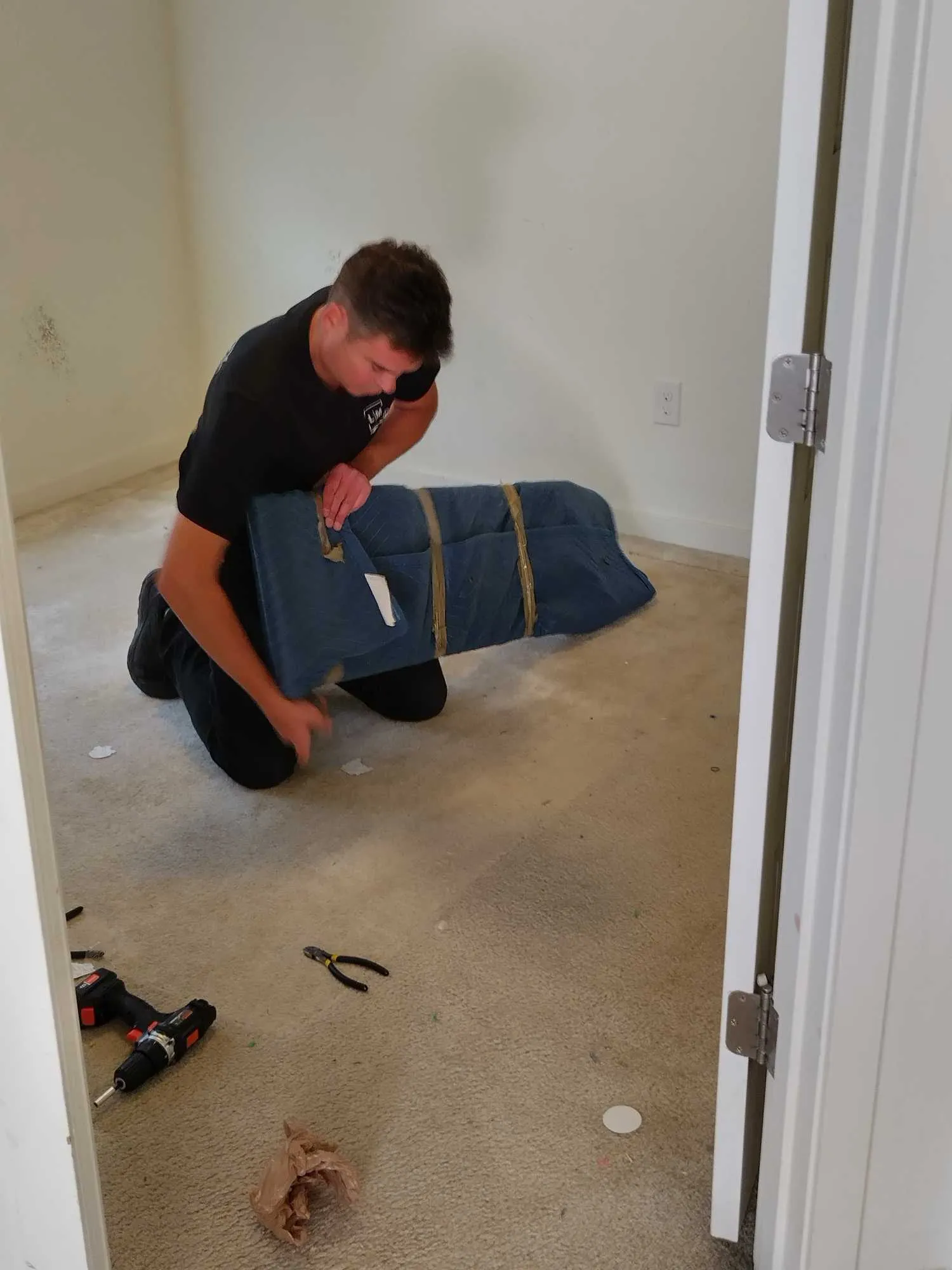
The clock case — including the bonnet (top hood), trunk (body), and base — is wrapped in furniture blankets with foam corner protection on protruding moldings.
Transport Upright
Grandfather clocks must travel upright. We secure the clock against the truck wall with proper strapping and padding to prevent any movement during transit.
Reinstall & Set Up at Destination
At the new location, we reinstall weights, hang the pendulum, and set the clock level on its base. We confirm it's running before we leave.
Note: After any move, a grandfather clock may require slight regulation (speed adjustment) to keep accurate time in its new environment. This is normal and can be done by the owner following the clock's manual, or by a clockmaker. We don't provide clock repair services, but we'll flag any pre-existing issues we observe during the move.
Grandfather Clock Moving FAQs
Ready to Move Your Grandfather Clock?
Call Legacy Moving for careful, expert clock moving in Denver. Free quotes — no obligation.