
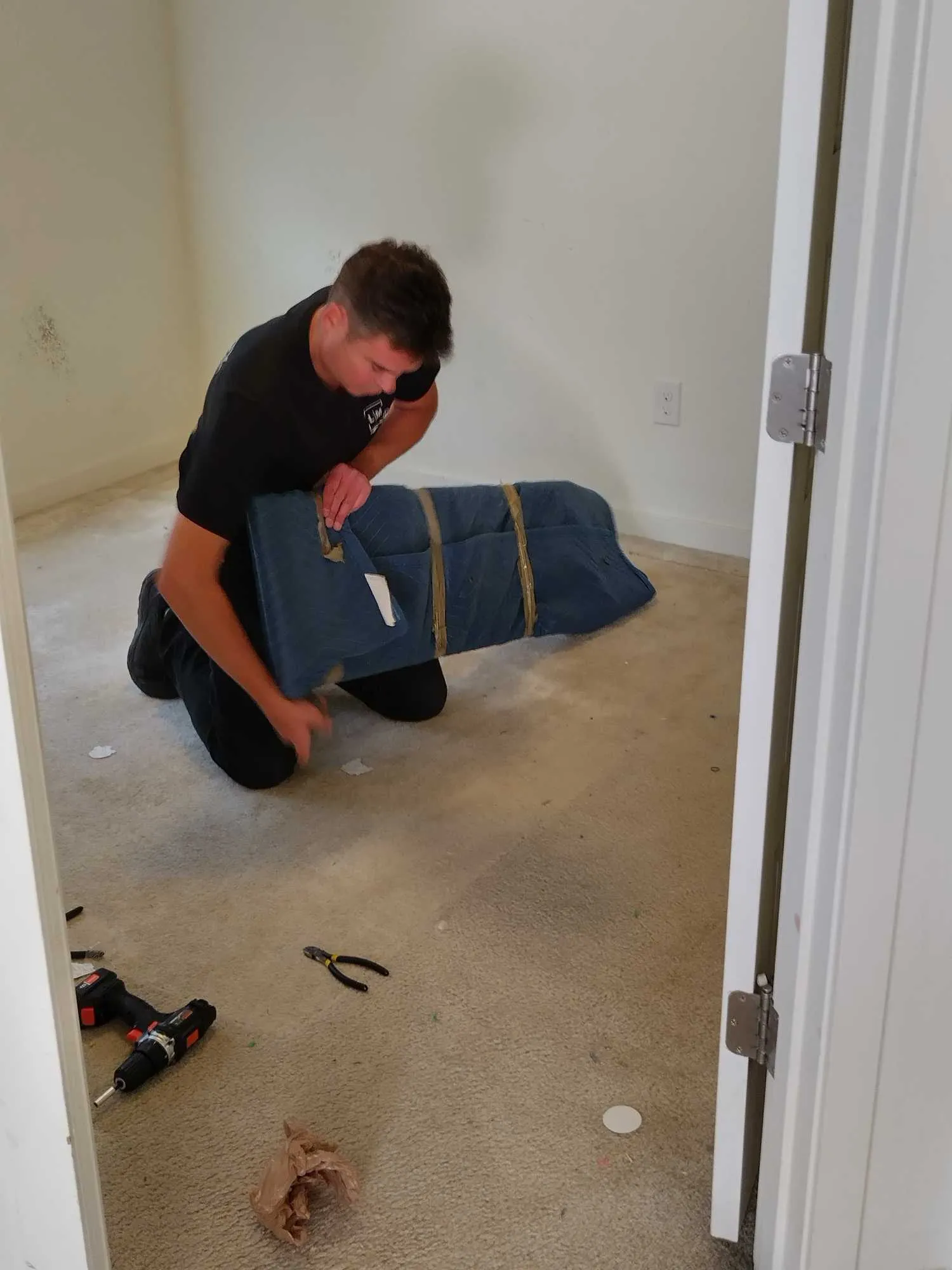
Moving into a downtown Denver condo is genuinely different from moving into a house in Lakewood or a garden-level apartment in Thornton. The physical logistics alone are more complicated. But layer in elevator reservation windows, HOA requirements, certificate of insurance requests, move-in deposits, parking permits, and building-specific rules that vary from one building to the next — and you have a move that requires significantly more coordination than most people expect going in. The people who struggle on move-in day are almost always the ones who didn't know what questions to ask ahead of time. This is your chance to be the one who does.
Why Downtown Denver Condo Moves Work Differently
When you move into a single-family home or a low-rise apartment complex, the logistics are fairly direct. You pull up, you carry things in, you're done. Downtown Denver condos introduce a layer of shared-building complexity that changes almost every part of that equation.
You're sharing an elevator with dozens or hundreds of other residents. You're working within a loading zone that the building management controls. You're subject to HOA rules that were written specifically to protect the building's common areas and other residents from the disruption of someone else's move. And you're operating in a dense urban environment where street parking for a moving truck isn't something you can just wing on the day.
None of this makes a downtown Denver condo move impossible — far from it. But it does make it a move that needs to be planned three to four weeks in advance rather than the week before. The buildings and neighborhoods along the Denver corridor — LoDo, RiNo, Capitol Hill, LoHi, Five Points, the Union Station area — each have their own patterns, and understanding the general framework applies across all of them.
Step One: Contact Building Management Immediately After Your Closing or Lease Signing
The very first call or email you make after your move date is confirmed should be to your building's management company or HOA board. Not to your movers, not to your utility company — the building first. Everything else flows from what they tell you.
You need to ask them a specific set of questions, and you want the answers in writing if at all possible:
- Do I need to reserve the freight or service elevator for my move?
- What are the available time windows, and how do I book one?
- Does the building require a Certificate of Insurance from my moving company?
- If yes, what coverage amounts are required, and does the building need to be listed as additional insured?
- Is there a designated loading zone or loading dock? What are the time restrictions on it?
- Are there move-in hours I'm required to stay within?
- Is there a move-in fee, a refundable deposit, or both?
- Are there any building rules about how furniture or appliances need to be protected during transit through common areas?
This conversation needs to happen three to four weeks before your move, not three to four days. Elevator slots fill up. COI paperwork takes time to process. Parking permits through the City of Denver require advance application. Starting late on any of these creates a cascade of problems that are almost always avoidable.
Elevator Reservations: How They Actually Work
The elevator reservation system in downtown Denver buildings exists for a practical reason. In a high-rise or mid-rise with dozens of units, you can't have multiple residents all trying to move furniture through the same elevator simultaneously. And a padded, reserved elevator moving slowly with heavy furniture is not something other residents want to share with their daily commute.
Most managed buildings in downtown Denver handle this by designating specific time windows — typically two to four hours — during which the freight or service elevator is padded and reserved for a single unit's move. Outside of that window, the elevator reverts to normal use. Some buildings schedule one move-in window per day. Others can accommodate two, split between morning and afternoon. In some high-demand buildings, particularly newer towers near Union Station and LoDo, available slots can be booked weeks out, especially on weekends.
When you book your elevator slot, you're committing to a window. That's the time your movers have to get everything into the building and up to your unit. If your move runs longer than the window — because you have more than expected, because there were delays, because the crew is short-handed — the building has the authority to end the elevator reservation. Some buildings are flexible about extending by thirty minutes if the elevator isn't needed next. Others are not. You can't count on flexibility.
Freight Elevators vs. Passenger Elevators
If your building has a dedicated freight or service elevator, use it. Don't attempt to move furniture or large boxes through the main passenger elevator even if it fits. Buildings take common area protection seriously, and using the passenger elevator for move items when a service elevator exists is the kind of thing that gets your move stopped and your deposit held.
Older buildings in Capitol Hill, Curtis Park, or the edges of Five Points sometimes have only one elevator total, which needs to be padded and reserved the same way a dedicated freight elevator would be. In these situations, the elevator is completely unavailable to other residents during your window, which is part of why the building manages it so carefully.
For residential moves that involve stairs as a backup — particularly in smaller downtown buildings with three or four floors — some items may need to go up the stairs if they're too large for the elevator. Worth knowing this ahead of time so your movers can plan for it.
Certificate of Insurance: The Requirement That Stops Unprepared Movers at the Door
This one catches people off guard more than almost any other part of a downtown Denver condo move. A Certificate of Insurance — commonly called a COI — is a document issued by a moving company's insurance carrier that confirms the company holds active liability coverage. In many downtown Denver condo and apartment buildings, this document is required before movers are permitted to access the building at all.
The building or HOA typically needs to be listed on the COI as an "additional insured" party. This protects the building if the moving crew damages a common area — a lobby floor, elevator walls, hallway baseboards, the loading dock surface. Without that COI on file, the building has no recourse if something gets damaged by your movers. And so many of them simply don't allow access without it.
Here's where the timing matters: a COI isn't something a moving company can produce instantly. They have to request it from their insurance carrier, which typically takes a few business days. And your building management needs time to receive, review, and approve it before your move date. In practice, you want this process started at least ten days to two weeks before move-in day.
When you confirm your moving company, one of the first things you tell them is whether your building requires a COI, what coverage amounts are specified, and whether the building needs to be listed as additional insured. Any reputable, licensed moving company will be completely familiar with this process. It's routine for companies that work regularly in downtown Denver. If a moving company has never heard of a COI or seems confused by the request, that's meaningful information about their experience level.
You can read more about what licensing and insurance actually mean in the context of hiring movers at our FAQs page — it covers the questions people ask us most often about what proper insurance coverage looks like.
Parking for the Moving Truck: Plan This Three Weeks Out
Parking is where downtown Denver moves go sideways more often than any other single issue. Moving trucks are large. Downtown Denver streets were not designed with them in mind. Blocks in LoDo, LoHi, and parts of Capitol Hill are narrow, often one-way, and covered by active parking enforcement. A moving truck that parks illegally — even for thirty minutes while the crew unloads — is a real risk for a ticket or a tow.
The City and County of Denver allows residents to apply for temporary "No Parking" signs through Denver Public Works for moving purposes. These signs reserve a section of the street curb for your moving truck on a specific date. They are not guaranteed — you have to apply in advance and the permit is subject to approval — and they take time to process. The general guidance from Denver Public Works is to apply at least two weeks before you need the permit, and three weeks if your move falls on a weekend.
Skipping this step and hoping for the best is a gamble most experienced downtown movers would tell you not to take. The domino effect of a ticketed or relocated truck on move-in day — especially when you're working within a fixed elevator window — is significant. Your movers lose time, the crew has to walk further with heavy furniture, you're watching your elevator slot tick down, and a stressful day gets considerably worse.
Building Loading Docks and Designated Zones
Some newer downtown Denver buildings — particularly larger towers built in the last fifteen years in RiNo, LoDo, and the Union Station neighborhood — have private loading docks or designated vehicle zones for move-in access. These are ideal when they exist, but they come with their own set of rules: time limits, activation procedures, required notification to building management, height restrictions on the dock, and in some cases a requirement for management to be physically present to grant truck access.
If your building has a loading dock, you still need to ask how it works and what's required. Don't assume a loading dock means "pull up and start unloading whenever."
HOA Rules: What They Cover and Why They Matter on Move-In Day
If you're buying rather than renting in a downtown Denver building, you've entered HOA territory. Denver's downtown condo HOAs tend to be more actively managed than suburban neighborhood HOAs, and the rules they enforce are more directly relevant to daily building life. The CC&Rs (Covenants, Conditions, and Restrictions) you agreed to at closing govern a lot more than most new owners realize until after they've moved in.
Move-In Hours
Most downtown Denver condo buildings have established hours during which moves are permitted. Commonly this is something like 8 a.m. to 5 p.m. on weekdays and 9 a.m. to 4 p.m. on weekends, though it varies by building. Some buildings prohibit moves entirely on Sundays or on recognized holidays. These rules exist because move-in day is genuinely disruptive to other residents — noise, elevator monopolization, foot traffic in common areas — and the HOA is balancing your needs against everyone else who lives in the building.
If you plan a move that starts at 7 a.m. because that's when the truck arrives, and the building doesn't allow move activity until 9 a.m., your crew will be waiting in the parking lot. Factor in the real start time when you schedule the moving company.
Move-In Deposits and Fees
Many downtown Denver buildings charge a refundable move-in deposit, a non-refundable move-in fee, or both. The deposit protects the building against damage to common areas during your move — elevator walls, lobby floors, hallway paint, the loading dock surface. If a post-move inspection finds damage, the cost of repair comes out of the deposit. If there's no damage, the deposit is returned, typically within thirty to sixty days.
Fees vary widely by building. Ask your building management specifically what you'll owe before move-in day and when it needs to be paid. Surprises on this front are avoidable with one conversation.
What Else the CC&Rs Likely Govern
Move logistics aside, the CC&Rs that come with your downtown Denver condo cover a range of things that are worth understanding before you start making plans for your new home:
- Flooring rules — Many buildings require a minimum percentage of floor area to be covered with rugs or carpet on upper floors to reduce noise to neighbors below. If you're planning hardwood, tile, or concrete throughout, check the CC&Rs first.
- Renovation approval — Modifications beyond cosmetic paint often require a submitted plan and HOA board approval before work can begin. Plumbing, electrical, and structural changes are almost always subject to review.
- Pet policies — Weight limits, breed restrictions, and limits on the number of pets are common in downtown Denver condo buildings and tend to be enforced.
- Short-term rental restrictions — A significant number of downtown Denver HOAs prohibit or heavily restrict short-term rentals through platforms like Airbnb. If this is relevant to your plans, verify the policy before closing.
- Common area rules — Rooftop decks, pool areas, fitness centers, shared terraces. Each building has its own policies around scheduling, guest access, hours, and reservation procedures.
- Noise policies — Quiet hours and restrictions on construction or renovation noise are standard in managed downtown buildings.
Reading the CC&Rs before you move in — not six months after when a neighbor has filed a complaint — is genuinely one of the better uses of an hour you can find during the weeks leading up to your move.
How the Neighborhoods Affect Move-In Logistics
Different downtown Denver neighborhoods have meaningfully different move-in conditions. Knowing what to expect in your specific area helps you plan more accurately.
LoDo and Union Station
Historic brick buildings, converted warehouses, and newer towers are mixed throughout. Parking is consistently the hardest part of moves in this area — streets are narrow, loading zones are limited, and enforcement is active. Newer towers near Union Station tend to have better loading dock infrastructure. Older buildings along the 16th Street corridor vary widely. COI requirements are common throughout LoDo.
RiNo (River North Arts District)
Primarily newer construction — mid-rise and some high-rise buildings built over the last decade. Wider streets than LoDo in most areas, which helps with truck access. Loading infrastructure is generally better in newer RiNo buildings. HOAs in new construction buildings here can be quite active and detailed in their move-in procedures.
Capitol Hill
Older buildings dominate — some converted Victorian homes, some mid-century apartment buildings repurposed as condos. Elevators range from small and slow to adequately sized depending on the building. Parking is consistently tight throughout Capitol Hill, and permit parking zones cover much of the neighborhood. Start the parking permit process early for a Capitol Hill move.
LoHi (Lower Highlands)
A mix of older residential properties converted to condos and newer mid-rise construction. The hillside terrain creates some unusual building orientations — the "ground floor" entrance can vary depending on which side of the building you approach. Street access can be complicated on some of the steeper blocks. Newer construction LoHi buildings tend to have cleaner move-in procedures.
Five Points and Curtis Park
Generally more accessible than the core of downtown — wider streets, more street parking available in some areas — but still city conditions. Older buildings are common, with the elevator variability that comes with that. A mix of managed condo buildings and smaller converted properties means move-in requirements vary more from building to building than in some other neighborhoods.
If you're moving into a building in any of these areas, our Denver local moving page covers more about what moves in the city look like from a logistics standpoint.
Choosing a Moving Company That Understands Downtown Denver Buildings
This is worth emphasizing: not every moving company in the Denver metro has meaningful experience with downtown high-rise and mid-rise condo moves. The logistics of a downtown condo move are genuinely different from a suburban house move, and a company that mostly handles houses in Arvada or Centennial may not be familiar with COI requirements, freight elevator timing, or how to plan a move around a fixed four-hour window in a way that actually works.
When you're evaluating local moving companies, ask specifically about their experience with downtown Denver buildings. Ask whether they've worked in high-rises. Ask how they handle the COI process. Ask how they plan crew size and timing when working within a restricted elevator window. A company with real downtown experience will answer these questions without hesitation because they've handled them dozens of times.
Also be specific with the moving company about your building's situation from the very first conversation. Give them the address. Tell them the floor you're on. Tell them about the elevator window and the loading situation. Tell them whether a COI is required. The more information they have upfront, the more accurate their planning — and their estimate — will be. You can start that conversation anytime through our free quote form.
What Happens When People Don't Prepare
The scenarios that unfold on unprepared downtown Denver move-in days follow pretty predictable patterns. Movers arrive and the building won't let them in because no COI was submitted. The moving truck parks on a street with no permit and gets a ticket within twenty minutes. The elevator window was booked for 8 a.m. but nobody told the crew, so they showed up at 9 a.m. and the slot was half over. The move runs an hour past the elevator window and the building locks the elevator — half the furniture is still in the truck.
Every one of those situations is genuinely avoidable. None of them require exceptional planning skill. They just require asking the right questions early enough that there's time to act on the answers.
The moving tips section of our site covers a lot of the general preparation that applies to any move, but the downtown-specific layer is its own thing that deserves its own planning track. Running both in parallel — the general move checklist and the building-specific coordination — is how downtown Denver move-in days go smoothly.
A Practical Timeline for Planning a Downtown Denver Condo Move
Working backwards from move-in day, here's a realistic planning timeline that accounts for the moving parts of a downtown Denver building move:
Four Weeks Before
- Contact building management or HOA and get answers to all the questions listed at the top of this article
- Book your elevator reservation — if slots are limited, the earlier you do this the better
- Begin the Denver Public Works parking permit application for the moving truck
- Start getting moving quotes — tell every company the full situation including COI requirement, elevator window, and building address
Two to Three Weeks Before
- Confirm your moving company and request the COI immediately
- Submit the COI to building management and confirm receipt and approval
- Confirm parking permit status with Denver Public Works
- Pay any required move-in fee or deposit to the building
- Communicate your elevator window and building logistics to your moving company in detail
One Week Before
- Confirm the elevator reservation with building management
- Confirm the parking permit has been issued and know where to place the signs
- Confirm with your moving company: crew size, start time, all building-specific logistics
- Walk through the building if possible — identify the loading dock location, freight elevator entrance, path to your unit
Day Before
- Call building management to reconfirm the elevator reservation
- Set up parking permit signs if required
- Confirm start time with your moving company one more time
This kind of advance coordination is what separates downtown Denver moves that go well from the ones that don't. The packing and preparation side of things runs in parallel — getting your belongings ready for the move itself — but the building coordination track is what unlocks everything else.
After You're In: What New Downtown Denver Condo Owners Often Discover
Move-in day ends. You're in. But a few things tend to come up in the weeks after a downtown Denver condo move that are worth being aware of:
Deposit return process. If your building held a move-in deposit, follow up with building management about the inspection timeline and when you should expect the deposit back. Don't wait ninety days and then wonder what happened to it. Ask proactively.
Noise concerns from neighbors. You've just dragged furniture across floors, carried heavy things through hallways, and generally created more noise than this building normally sees in a week. Give it a few days, then consider introducing yourself to immediate neighbors. It goes a long way in building communities.
Parking and storage. If you discovered during the move that your building's parking or storage situation is tighter than expected, now is the time to get on any waitlists for additional parking spots or storage units. These tend to have real wait times in popular downtown buildings.
HOA communication. If you bought the unit, you're now part of the HOA. Get set up on the building's communication channels — email lists, apps, management portals. HOA meetings, maintenance notices, and building updates come through these channels, and being out of the loop is its own kind of headache.
One Last Thing Worth Saying
Downtown Denver condo living is excellent for a lot of people. The walkability, the city access, the character of the buildings, the energy of the neighborhoods — people who make this move typically love where they end up. The move-in process just has more pieces than a suburban house move, and the pieces are more time-sensitive.
The entire framework described here — elevator reservations, COI, parking permits, building hours, deposits — is completely manageable when you start on it early. What makes downtown Denver condo moves hard is showing up on move-in day without having worked through any of it. What makes them smooth is three weeks of advance coordination and a moving company that's done this kind of move many times before.
If you're looking at a residential move into a downtown Denver building and want to talk through the specifics of your situation before booking anything, our team is available to answer questions — no pressure, no commitment required. You can reach us through the contact page or fill out a free quote request and we'll be in touch.
Moving Into a Downtown Denver Condo?
Elevator reservations, COI requirements, parking permits — we've handled all of it, many times. Tell us about your building and we'll walk you through exactly what your move-in day needs to look like.
Get a Free Quote