
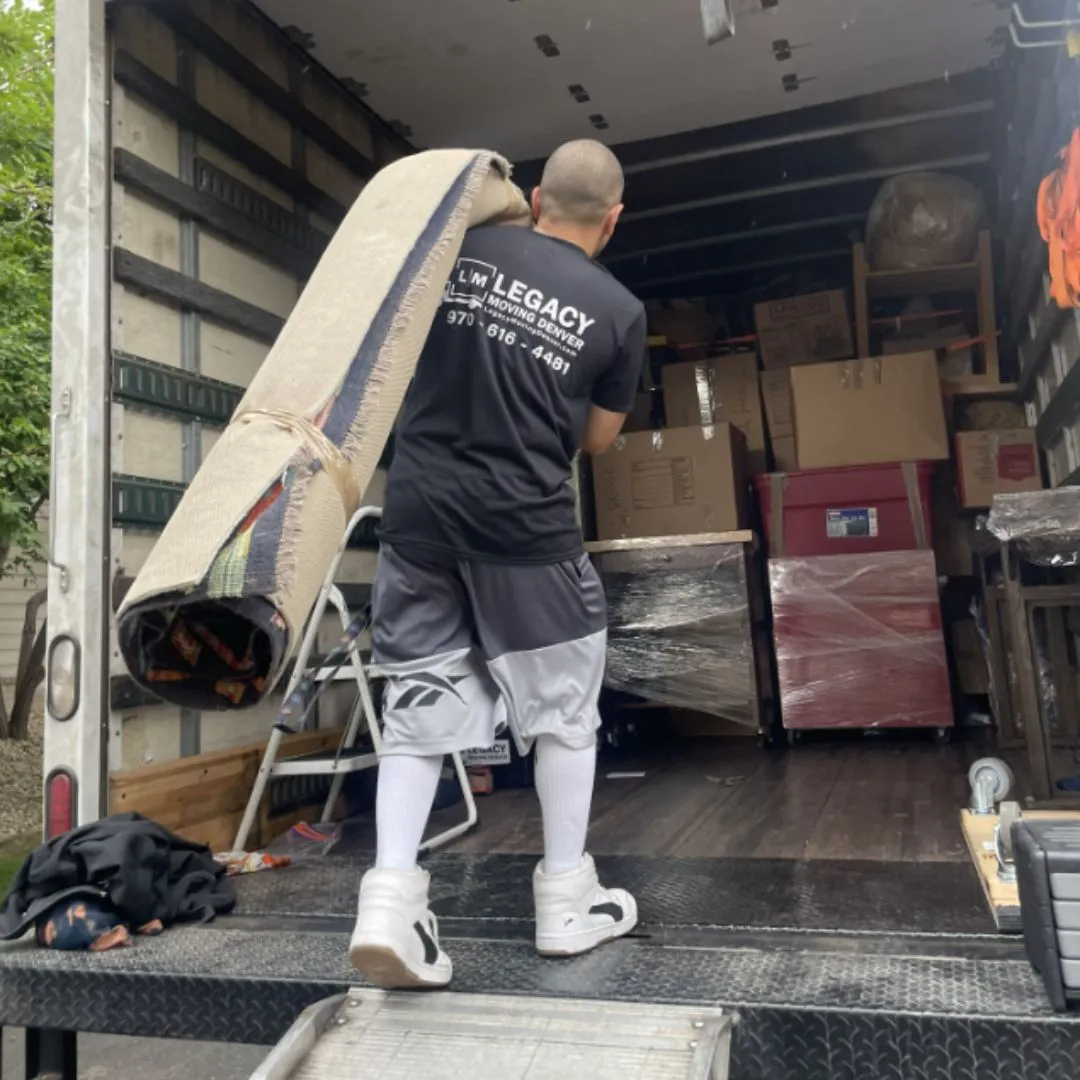
"How much does it cost to hire movers in Denver?" is one of the most Googled questions in the category, and the answer is genuinely complicated. The range runs from $400 for a studio apartment move to $10,000+ for a large house long-distance relocation. Here's how to understand where your move fits—and what to watch for.
Local Denver Move Costs: The Basics
Most Denver-area moving companies charge by the hour for local moves (moves within the metro area). Current market rates in early 2026:
- 2-mover crew: $120–$180 per hour
- 3-mover crew: $160–$240 per hour
- 4-mover crew: $200–$300+ per hour
These rates typically include the truck. Most companies have a minimum booking of 2–3 hours regardless of how quickly the job is completed.
What a Local Move Actually Costs by Home Size
Here are realistic ranges for local Denver moves, including loading, drive time, and unloading:
- Studio apartment: $400–$700 (2–4 hours, 2 movers)
- 1-bedroom apartment: $600–$1,000 (3–5 hours, 2 movers)
- 2-bedroom home/apartment: $900–$1,600 (4–7 hours, 2–3 movers)
- 3-bedroom home: $1,400–$2,500 (6–10 hours, 3 movers)
- 4+ bedroom home: $2,500–$5,000+ (potentially a 2-day move)
These are ballpark figures for a straightforward move. Complications—stairs, elevators, long carrying distances, specialty items, or significant packing work—add to the total.
Long-Distance Move Costs
For interstate moves (moving to or from Denver from another state), pricing shifts from hourly to weight-based:
- Under 1,000 miles: $2,500–$5,000 for a 1–2 bedroom move
- 1,000–2,000 miles: $4,000–$8,000 for a 2–3 bedroom move
- 2,000+ miles (e.g., California to Colorado): $6,000–$12,000+ for a full household
These estimates are for the moving service itself. Storage, packing services, and specialty items are additional.
What's Usually Included (and What Isn't)
Typically Included
- Moving crew labor
- Moving truck
- Basic equipment (dollies, hand trucks, moving straps)
- Moving blankets for furniture protection
- Basic furniture disassembly and reassembly (beds, tables)
- Released value protection (minimal, but standard)
Usually NOT Included (Potential Add-Ons)
- Packing services: Having movers pack your boxes adds significant cost (more below)
- Packing materials: Boxes, tape, bubble wrap, packing paper are typically sold separately or billed additionally
- Full-value protection insurance: Upgrading from released value to full protection costs extra
- Specialty item fees: Pianos, gun safes, pool tables, grandfather clocks, and large art pieces often have additional charges
- Long carry fees: If the truck can't park within a certain distance of your home (common in downtown Denver and dense neighborhoods), carriers may charge for the extra distance
- Stairs fees: Some movers charge per flight of stairs above the first floor
- Elevator waits: If you're in a Denver high-rise and elevator access is limited, wait time may be billed
- Storage: If there's a gap between your move-out and move-in dates
Packing Services: What They Cost and When They're Worth It
Professional packing services add significantly to the total bill but can be worth every penny in certain situations. Rough cost estimates:
- Full packing service (entire home): $500–$2,500+ depending on home size and volume
- Partial packing (kitchen only, fragile items only): $200–$600
- Packing materials only (no labor): $50–$300 depending on quantity
Professional packing is worth considering when:
- You have a large volume of fragile items
- You're extremely busy and time is more valuable than money
- Your company is covering relocation costs
- You want insurance coverage to apply to packed items (full value protection typically only applies to professionally packed boxes)
Hidden Costs That Catch People Off Guard
Travel Time
Many Denver moving companies charge travel time—the time it takes for the crew to drive from their facility to your home (and sometimes back). This can add 30–60 minutes to your bill. Ask upfront whether travel time is included or billed separately.
Fuel Surcharges
Some companies add a fuel surcharge, especially for longer local moves or if your destination is in the mountains. Ask if this is included in the hourly rate.
Weekend and Peak Season Premiums
Moving on a Saturday or during peak season (May–September) is more expensive. If you have flexibility, moving on a Tuesday in November will cost you noticeably less than a Saturday in July.
Storage Costs
If your new home isn't ready when you move out, you may need temporary storage. Denver storage unit costs vary significantly by size and location:
- Small unit (5x5 or 5x10): $50–$120/month
- Medium unit (10x10): $100–$200/month
- Large unit (10x20 or 10x30): $180–$350+/month
For information about using temporary storage during a move, see our temporary storage guide.
Building and HOA Fees
Some Denver apartment buildings and HOA communities charge move-in fees, require deposits for elevator use, or have rules that require movers to use specific entrances or move during restricted hours. Check with your building management or HOA before moving day.
Tipping: What's Expected
Tipping movers is standard and appreciated for good work. General guidelines:
- Good local move: $20–$30 per mover
- Excellent or physically demanding move: $40–$50 per mover
- Long-distance or multi-day move: $50–$100+ per mover depending on difficulty and duration
Tip in cash, given directly to each crew member. Don't give it to the company—it should go to the people who did the work.
Ways to Lower Your Moving Costs
Declutter Aggressively
Less stuff = less time = less money. Every item you don't move is money saved. See our guide on decluttering before a move for a practical system.
Pack Yourself
Doing your own packing is the single biggest way to reduce costs. If you're fully packed before the movers arrive, they spend their time only moving—not packing—and the job goes faster.
Move Mid-Week and Off-Peak
Tuesday, Wednesday, and Thursday moves are generally cheaper and easier to schedule. November through March (excluding holiday weeks) is the least expensive and least busy time to move in Denver.
Be Ready When Movers Arrive
Every minute of indecision, half-packed boxes, and last-minute changes costs you money at the hourly rate. Having everything ready before the crew shows up is the most controllable variable in how long the job takes.
Get Multiple Quotes
At least three estimates from reputable companies. Don't automatically choose the cheapest—unusually low quotes often signal hidden fees or substandard service. But comparing quotes gives you a sense of the real market rate.
Getting an Accurate Quote
For the most accurate estimate, give the moving company as much detail as possible:
- Exact number of rooms and approximate square footage
- Any specialty items (pianos, safes, large art, appliances)
- Floor of origin and destination (stairs, elevators)
- Parking situation at both locations
- Whether you'll need packing services
- Your preferred moving date
An in-home or video walkthrough estimate is more accurate than a phone quote for anything larger than a studio apartment.
What Happens If You Move During Peak Season?
Peak moving season in Denver runs May through September, with June, July, and August being the busiest months. During this time, demand exceeds supply—and prices reflect that. What changes specifically:
- Higher hourly rates: Some companies raise rates 10–20% during peak season compared to off-peak months
- Less flexibility on dates and times: Saturdays in June fill weeks in advance. If you want a Saturday move in summer, book 6–8 weeks out or plan to be flexible
- Reduced crew availability: The best crews book out first. Last-minute bookings in peak season mean you may not get the most experienced team
- End-of-month crunch: Most leases end on the last day of the month, making the final week especially competitive. Mid-month moves are noticeably easier to book and sometimes cheaper
If you have any flexibility in your timeline, moving in March, April, October, or November offers the best combination of reasonable rates, good scheduling availability, and typically decent weather. January and February are the cheapest months but come with Colorado winter weather considerations—see our guide on winter moving in Colorado.
Understanding Moving Company Quotes: What to Compare
When you receive multiple quotes, comparing them apples-to-apples requires attention to detail. Two quotes for the same move can differ by hundreds of dollars for legitimate reasons—or because one company is hiding fees.
Look at each quote for:
- Included services: Does the quote include truck, fuel, moving blankets, and basic equipment? Or are those add-ons?
- Minimum hours: A 2-hour minimum at $180/hr is $360 before anything else. A 3-hour minimum at $150/hr is $450. The hourly rate alone doesn't tell the story.
- Travel time policy: Is the time to drive from their facility to your home billed or free?
- Overtime/additional hour rate: What happens if the job runs over the estimated time?
- Binding vs. non-binding: Can the price increase on the day of the move?
- Cancellation policy: What happens if your move date changes? Is your deposit refundable?
The Real Cost of DIY Moving
Many people consider renting a truck and moving themselves to save money. It's worth understanding what that actually costs versus hiring professionals.
DIY move costs for a 2-bedroom home in Denver:
- Truck rental: $100–$300/day for a large truck, depending on size and season
- Mileage: $0.79–$1.29 per mile depending on company
- Fuel: Large moving trucks get 8–12 MPG. A cross-town move of 30 miles could add $25–50 in fuel
- Moving supplies: $100–$200 for boxes, tape, bubble wrap, and packing paper
- Loading help: If you hire day laborers or use a labor-only service, add $200–$600 for help with loading and unloading
- Equipment rental: Dollies and furniture pads are often rented or purchased separately ($50–$150)
- Damage risk: Without professional movers, damage to furniture and walls is more likely. Rental trucks have limited insurance coverage.
A genuine DIY move for a 2-bedroom might run $500–$800 in direct costs. Professional movers for the same job might run $900–$1,400. The gap is real but often smaller than people expect when all DIY costs are included—and professional movers bring expertise, efficiency, and liability that DIY simply can't replicate.
If you're trying to cut costs, a hybrid approach often works well: rent a truck, pack everything yourself, and hire a labor-only service like Legacy Moving's loading and unloading service for just the heavy lifting. This eliminates the most physically demanding and highest-risk work while keeping overall costs down.
Moving Costs by Denver Neighborhood
Your specific neighborhood can significantly affect your moving cost. Some factors:
- Downtown Denver and LoDo: Parking for a moving truck can be challenging. Some buildings require street parking permits. Freight elevator reservations add time. These factors can add 30–60 minutes to the overall job.
- LoHi and Highland: Typically residential streets with adequate parking, but the steep terrain can slow things down
- Cherry Creek: High-density area, parking can be competitive. Some buildings have specific move-in windows.
- Wash Park and Congress Park: Generally straightforward—residential streets, manageable parking, ground-level homes
- Stapleton/Central Park: HOA communities may have move-in/out hour restrictions or designated entrances. Confirm with your HOA before moving day.
- Highlands Ranch and Lone Tree: Suburb moves are generally smoother on access, but the distance from Denver adds drive time if movers are coming from the city
Always tell your moving company the specific addresses at origin and destination, not just the general neighborhood. They may have experience with your specific building and can flag potential cost factors upfront.
Get a Transparent Quote from Legacy Moving Denver
We provide clear, itemized estimates with no hidden fees. Our pricing is straightforward and our team will walk you through exactly what's included. Get your free quote online or give us a call.