
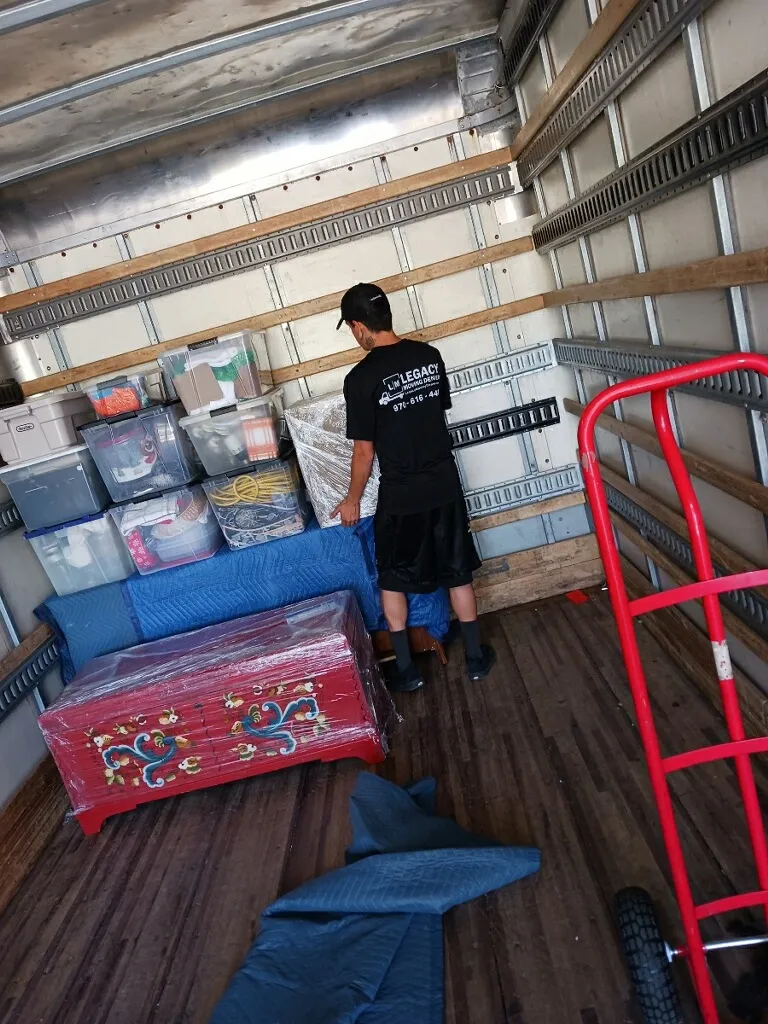
Most people underestimate how much their future selves will care about box labeling until they're standing in a new home surrounded by forty unmarked boxes, exhausted, and trying to figure out which one has the coffee maker in it. A good labeling system isn't about being overly organized — it's about reducing the amount of thinking and searching you have to do when you're already drained from moving day. And in a Denver relocation where you might be moving from a house in Lakewood into a condo in RiNo, or from an apartment in Aurora into a townhouse in Highlands Ranch, the stakes are real: the more clearly your boxes are labeled, the faster you're functional in your new home.
Why Box Labeling Actually Matters More Than People Think
Here's the honest reality of most moves: the packing happens in a sprint at the end, boxes get thrown together, most of them say something like "kitchen misc" or nothing at all, and then on the other end you spend the first week living out of boxes and rummaging through them trying to find the things you need right now.
Good labeling costs almost nothing in extra time — maybe five seconds per box if you have a system — but it pays off over days of unpacking. When your movers are placing boxes in your new home, clear labels mean boxes land in the right rooms instead of piling up in one central area for you to redistribute later. When you're unpacking, clear labels mean you can prioritize what to open first without having to dig through everything.
This is one of the more impactful things you can control in the moving process, and it requires nothing more than a plan, some markers, and about thirty seconds of attention per box.
The Foundation: What Every Box Should Have
Before getting into room-specific details, there are a few pieces of information that belong on every single box you pack, regardless of what's in it.
1. Destination Room
This is the most important label on any box: where does it go in the new home? Not where it came from — where it's going. Write it large, in a marker that's easy to read, on at least two sides of the box. Labeling only the top means the label is invisible when boxes are stacked. Labeling two sides means no matter how a box is oriented in a stack, someone can read it.
Be specific with room names. "Kitchen" is useful. "Bedroom" is less useful if you have three bedrooms. "Primary bedroom," "Mia's room," "Guest room" — the more precise you are, the faster your movers can place boxes in the right place without asking you every thirty seconds.
If you've done a thorough declutter before packing, you'll have fewer boxes total, which makes the whole labeling exercise easier and faster.
2. General Contents
You don't need an itemized inventory on the side of every box. But a brief descriptor — "pots and pans," "bathroom towels and toiletries," "living room books," "winter coats" — is genuinely helpful when you're trying to figure out which box to open first in the first few days of living somewhere new.
You also don't have to be exhaustive. If a box has fifteen miscellaneous things in it, write the three or four most notable or most useful ones. That's enough to make smart decisions about box priority without turning labeling into its own project.
3. Handling Instructions
"Fragile," "This Side Up," "Heavy," "Do Not Stack" — these belong clearly on any box where they apply. They're not just for your movers' benefit, though they do matter there. They also matter when you're the one moving boxes around the new home before everything is unpacked.
A "Fragile" label written small on one side of the box in the same size as the rest of the text tends to get ignored. Write it large, write it in a different color if you have one, and write it on multiple sides. Bright red or orange markers are worth having specifically for fragile labeling. When a box says FRAGILE in three-inch letters on three sides, it communicates urgency. A small note in the corner does not.
4. Priority Level
This one most people skip entirely, but it might be the most practically valuable label you can add. Mark boxes as "Open First," "Week 1," or "No Rush" — or whatever equivalent system makes sense to you. The point is to separate boxes that contain things you'll need immediately (coffee maker, phone chargers, a change of clothes, toilet paper, your child's comfort items) from boxes that can sit for a week while you get settled.
If you've packed an essentials box — which is something worth doing before every move regardless of distance — label it clearly as the first thing to be placed accessible in the new home, not loaded last into the truck where it gets buried. More on the essentials box below.
Room-by-Room Labeling Guide
Different rooms have different labeling considerations. Here's a practical breakdown by space.
Kitchen
The kitchen is usually the most box-intensive room in any home, and it's also the room where you'll feel the impact of poor labeling most immediately. You'll want to be functional in the kitchen within the first day or two of moving in. That means knowing where the everyday dishes are versus the special occasion china. Where the cooking essentials are versus the random gadgets you barely use.
Consider breaking kitchen boxes into subcategories on the label: "Everyday dishes," "Pots and pans," "Pantry dry goods," "Baking supplies," "Small appliances — daily use," "Small appliances — occasional." This level of specificity means you open the right boxes in the right order rather than working through all twelve kitchen boxes to find the pasta strainer.
Mark anything fragile clearly — glasses, ceramics, serving platters. Professionals who handle packing services typically separate fragile kitchen items into dedicated boxes precisely for this reason: mixed boxes where fragile items are buried under heavier ones are where breakage happens.
Bedrooms
Include the specific room name and general contents. "Primary bedroom — nightstand items and reading books" is a genuinely useful label. "Bedroom" is not. If you have kids, using their names on bedroom boxes removes all ambiguity. "Liam's room — toys," "Liam's room — clothes," "Liam's room — school supplies" — now anybody helping you unpack can put things in the right place without running questions past you.
Clothes boxes are worth separating by season if you're doing a seasonal move. Moving to Denver in October and packing summer clothes you won't need for eight months? Label those "Primary bedroom — summer clothes — low priority" so they go in the back of a closet without ever being fully unpacked right away.
Bathrooms
Bathroom boxes are usually smaller, but they contain things you need immediately: toiletries, medications, toilet paper, towels. A bathroom box labeled clearly enough to be placed in the right bathroom on moving day (especially in a multi-bathroom home) saves you from hauling it across the house later. "Main bathroom — daily use toiletries" versus "Guest bathroom — towels and extras" makes placement effortless for whoever is helping with boxes.
Medications deserve specific mention. Keep them in a separate clearly labeled bag or small box that stays with you personally during the move, not in the truck with general household goods. This is a practical safety measure that applies regardless of how well the rest of your labeling is.
Living Room and Common Areas
Living room boxes often have a mix of items — books, decorative objects, electronics accessories, media. Electronics boxes especially deserve clear labels and fragile indicators where applicable. "Living room — AV cables and remotes" and "Living room — books, shelf 1" are both more useful than "Living room misc."
Anything with specific reassembly instructions — furniture that was disassembled for the move, wall-mounted TV hardware, shelving systems — benefits from a label that connects the hardware bag to the piece of furniture it belongs to. "Hardware — IKEA shelf unit, living room" taped to a bag and placed inside the box with the shelf pieces means you're not hunting for the right screws three days later.
Home Office
If you work from home or need your home office functional quickly, treat office boxes the same way you'd treat kitchen boxes: prioritize them in the labeling and mark "Open First" on the box with your computer, cables, and daily work items. "Office — computer and cables — Open First" communicates priority to everyone involved in the move and to you when you're standing exhausted in a new space trying to figure out where to start.
Documents, files, and important papers deserve their own separate clearly labeled box that you personally account for through the move. Tax records, lease agreements, insurance documents, passports — this box should probably be in your car rather than in the truck if at all possible.
Garage and Storage Items
Garage boxes are often the most chaotic part of any move, packed last, labeled least, and opened months after everything else is sorted. The items that come out of the garage and go into the garage are usually fine with a minimal label — "Garage — tools," "Garage — sports equipment," "Garage — holiday decorations." You're mostly just making sure they go to the right destination and can be roughly sorted on the other end.
Items that are genuinely going into long-term storage should be labeled even more carefully than items going directly into living spaces, because you might not open those boxes for six months or a year. "Storage — Christmas decorations 2024" is far more useful than "Misc holiday" when you're digging through a storage area in November trying to find something specific. If you're using a storage solution during your move — especially in a transitional move where you're not going directly from old home to new — clear labeling on stored boxes pays off enormously.
Color Coding: Simple, Fast, and Worth the Investment
Color coding is the single fastest way to make a box labeling system work well on moving day. The concept is simple: assign a color to each room and mark every box going to that room with that color. You can do this with colored tape, colored stickers, or just colored markers. Put a colored square on the doorframe or door of each room in the new home (a small piece of tape works fine), and your movers — or anyone helping — can place boxes correctly without needing to read every label or ask you where things go.
You don't need elaborate supplies. A pack of colored markers and some colored masking tape from a hardware store covers it. Blue for primary bedroom, green for kitchen, red for living room, yellow for kids' rooms — whatever system makes sense to you. The colors themselves don't matter. The consistency does.
In a busy Denver move where multiple people are carrying boxes in at the same time, a color system reduces the bottleneck of everyone having to stop and check with you before placing anything. Boxes flow to the right rooms, you don't have to be the router for every box decision, and the unloading phase moves meaningfully faster.
The Essentials Box: The Most Important Box You'll Pack
Separate from labeling your general boxes, there's a concept worth building into every move: the essentials box, or essentials bag. This is the container that holds everything you'll want access to in the first twelve to twenty-four hours of being in your new home, before any other unpacking happens.
What goes in it depends on your household, but commonly includes:
- Phone chargers and any essential electronics chargers
- A change of clothes for each person in the household
- Toiletries — toothbrushes, toothpaste, soap, shampoo, deodorant
- Toilet paper — at least enough for the first day
- Medications
- Snacks and water bottles
- Paper towels and a basic cleaning spray
- Coffee maker and coffee if that's relevant to your sanity
- A box cutter or scissors for opening other boxes
- Bedding, or at least pillows, if you're sleeping in the new place on night one
- Kids' comfort items — a stuffed animal, a tablet, whatever matters most
- Pet essentials if you have animals
Label this box in a way that makes it impossible to miss. Large letters. Something that reads as genuinely different from your other boxes — "OPEN FIRST — ESSENTIALS" in the biggest text you can write. Place it last on the truck so it comes off first, or keep it in your personal vehicle rather than loading it at all.
The essentials box deserves its own dedicated article, honestly. But in the context of labeling, the point is that it represents the logical endpoint of a good labeling mindset: knowing what you need when, and making sure that information is communicated clearly on the outside of every box.
Labeling Fragile Items: Go Beyond the Word
"Fragile" written on a box is a start, but on a busy moving day, a single word label in the same pen as the room name doesn't communicate urgency the way it should. Here are a few practices that actually work:
- Use a different color for fragile labels. Red or orange stands out. Everything else can be in black.
- Write it on multiple sides. At minimum, on both long sides of the box and the top. If it's only on one side, it'll end up facing the wall in a stack.
- Add "This Side Up" with an arrow. For boxes with items that need to stay oriented correctly — mirrors, framed artwork, tall glassware boxes — an arrow indicating which side should face up removes ambiguity.
- Note what's inside on fragile boxes. "Fragile — wine glasses" communicates more urgency than "Fragile — kitchen misc." People handle boxes differently when they know what's actually in them.
- "Do Not Stack" on boxes that shouldn't have weight placed on top of them. In a truck, this matters because boxes get stacked. In a new home, this matters because tired people stack things without thinking.
If you're using professional packing services, the team will typically label fragile boxes according to their own system. It's worth asking them what their labeling convention is so you know what to look for when boxes arrive at the new home.
Numbering Your Boxes: When It's Worth the Extra Step
For larger moves — a full house with many rooms, or an interstate move where boxes are going on a long-distance truck — a numbering system with a corresponding master inventory list gives you the ability to account for all boxes at the destination. You number each box sequentially, and in a notebook or a notes app you record what's in it.
This is especially worth it for moves involving temporary storage, where boxes might be in a facility for weeks or months before going to a final destination. When you know that box 47 contains the items you packed from the office desk, you can pull exactly that box when you need it rather than retrieving everything from storage to find one thing.
For a standard local Denver move where boxes go from one home directly to another, full inventory lists are optional rather than essential. But even for shorter moves, a quick photo of the contents of each box before closing it — stored in a phone album labeled "boxes" — creates a searchable visual inventory with almost no extra effort.
What Not to Do: Common Labeling Mistakes
Most labeling mistakes come from the same source: trying to go fast because packing is happening at the last minute. A few patterns that create real problems on the other end:
- Labeling only the top of the box. In a stack of five boxes, four of the tops are invisible. Label at least two sides.
- Using "Misc" as the main descriptor. "Kitchen misc" is minimally useful. "Kitchen misc — small appliances, dish towels" is much better. Adding even a few words saves time.
- Labeling where something came from rather than where it's going. "Old house kitchen" doesn't tell your movers where to put it in the new home. "New house kitchen" or just "Kitchen" does.
- Using pencil or light-colored markers. In a dim moving truck or a partly lit new home, pencil labels and light gray marker are nearly invisible. Black or dark blue markers in thick tip are the practical standard.
- Skipping labels on boxes you "know" the contents of. You know what you packed today. In four days, after packing forty more boxes, you will not remember what's in the unlabeled ones. Label everything.
- Mixing rooms in a single box without labeling it clearly. Sometimes this is unavoidable — partial-fill boxes at the end of packing often have items from different rooms. When this happens, the label should note the primary destination and mention it contains mixed contents: "Primary bedroom — mixed, includes some bathroom items."
Labeling for Moves Involving Multiple Floors or Complex Floor Plans
If you're moving into a multi-story home in Littleton or a townhouse in Westminster, destination room labels need to include the floor as well as the room. "Bedroom — second floor, primary" versus "Bedroom — second floor, guest" versus "Bedroom — basement" are all distinct destinations. In a multi-story home, movers carrying boxes need this information to make one trip to the right place rather than two trips because the room was ambiguous.
For anyone moving into a downtown Denver building where boxes go up an elevator and then through a hallway to a specific unit, clear destination labels also help when multiple boxes are being staged on a moving cart. Your movers will thank you for it, and it keeps the move within whatever elevator time window you're working with.
Labels and Your Moving Company: How They Work Together
When you work with a professional moving team, the labels on your boxes are one of the primary communication tools between you and the crew. Good movers follow label instructions — fragile handling, placement room, "this side up" orientation — as a matter of professional practice. The clearer your labels are, the more accurately they can execute them.
Before the move starts, it's worth a brief walkthrough with the crew lead to confirm room names. If your labels say "Primary bedroom" and your movers aren't sure which room that is when they arrive at the new place, two minutes of clarity at the start saves confusion throughout the move. A color coded door tag system — a small piece of colored tape on each doorframe matching the color on boxes — removes this ambiguity entirely.
If you have items that should not be moved by the crew — things staying in the old home, items you're transporting personally, boxes that belong to a different move or a different destination — label those clearly too: "DO NOT LOAD" in clear large text. This prevents the very frustrating scenario of discovering that something you intended to leave behind is now in the truck.
Most local moving teams in Denver are used to working with a variety of labeling systems, but the more clearly you've marked your boxes, the smoother the placement phase goes on both ends of the move. You can discuss labeling and any special handling needs when you request a free quote.
After the Move: Using Your Labels to Unpack Strategically
If you've labeled your boxes well, you have the ability to unpack strategically rather than randomly. The first day or two after moving into a new Denver home, the priority sequence generally looks something like:
- Essentials box — open immediately, before anything else
- Bedding and sleeping areas — you need to sleep tonight
- Bathroom basics — daily function
- Kitchen essentials — cooking and coffee
- Kids' rooms — familiar space helps children settle quickly
- Home office if needed for work
- Everything else — in whatever order makes sense for your household
Your labels are what make this sequence possible. If boxes are labeled with priority levels — "Open First," "Week 1," "No Rush" — you can literally ignore the low-priority boxes for several days without the nagging feeling that you should be unpacking everything at once. You've already made the decision about what matters when, and the labels communicate it.
The goal of all of this isn't perfection. It's functionality — being able to cook a meal, sleep in a bed, find a clean shirt, and work from your desk within the first day or two of being in your new home. Good labeling is what makes that possible without a week of rummaging through boxes that all look the same from the outside.
A Quick Reference Labeling Checklist
Before you seal each box:
- Destination room written large on two sides (include floor if multi-story)
- Brief contents description — at least the top two or three items
- Fragile label in a different color on multiple sides if applicable
- "This Side Up" with an arrow if orientation matters
- "Do Not Stack" if applicable
- Priority level — "Open First," "Week 1," or "No Rush"
- Color code matching the destination room's color
- Box number if you're using a numbered inventory system
Five to ten seconds per box. That's the actual investment. The return on that investment comes across days of unpacking in your new home, when you're finding things exactly where you expected them to be and not spending an hour excavating boxes to find the one thing you actually need right now.
For more on the broader Denver moving process — from deciding when to move to what to do if you need temporary storage during a transition — our resources section covers the full picture. Good labeling is relevant wherever you're moving in the metro, whether that's a downtown Denver condo, a house in Lakewood, a townhome in Aurora, or a new build in Longmont or Erie. If you're in the planning stages of a local or long-distance Denver move, you're welcome to reach out through the contact page or get started with a free moving quote.
Moving in the Denver Area?
Whether you need a full packing crew or just a moving team to handle the heavy lifting, we're here to make your Denver relocation as smooth as possible. Get a free, no-obligation estimate and we'll walk you through what your move looks like.
Get a Free Quote